Risk Reward Ratio in Trading: The Complete Beginner’s Guide to Consistent Profits (2026-2027)
Introduction
Risk Reward Ratio in Trading is one of the most powerful concepts every trader should understand before risking real money in the financial markets. Many beginners spend months searching for the perfect indicator, the best candlestick pattern, or a strategy with an extremely high win rate. While these tools can certainly improve decision-making, they are not the main reason professional traders remain profitable year after year. The real difference lies in how they manage every trade before they even enter the market.
Imagine two traders using the same strategy. One trader wins 80% of the time but risks ₹2,000 to earn only ₹1,000 on each trade. The second trader wins only 50% of the time but risks ₹1,000 to earn ₹2,500 whenever the setup is valid. Surprisingly, the second trader is likely to be more profitable over the long term because each winning trade covers multiple losses. This simple example highlights why understanding the Risk Reward Ratio in Trading is far more important than focusing only on your win percentage.
Professional traders do not expect every trade to be a winner. They accept that losses are a normal part of trading and build their strategies around controlling those losses while maximizing potential gains. Instead of chasing perfect accuracy, they rely on discipline, consistency, and proper risk management. The Risk Reward Ratio in Trading helps them evaluate whether a trade is worth taking before risking any capital.
Whether you trade Forex, Stocks, Commodities, Indices, or Cryptocurrency, the principles remain the same. A well-planned risk-reward ratio protects your account during losing streaks and allows winning trades to grow large enough to produce consistent profits. Throughout this guide, you will learn how to calculate the ratio, avoid common mistakes, combine it with position sizing, and use it like professional traders. By the end, you’ll understand why experienced traders often say that it is not about how often you win—it is about how much you win compared to how much you lose.
What is Risk Reward Ratio in Trading?
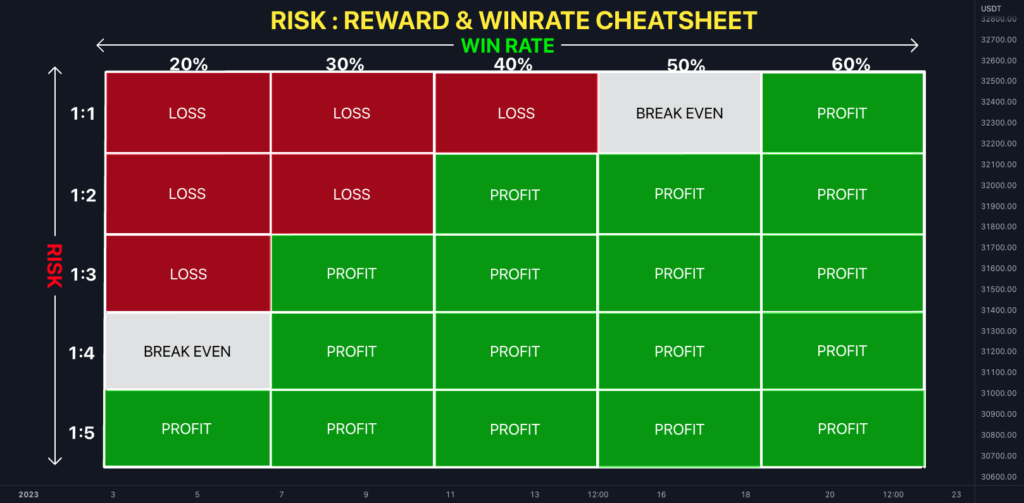
The Risk Reward Ratio in Trading measures how much money you are willing to risk compared to the amount you expect to earn on a single trade. It is one of the most important decision-making tools because it helps traders evaluate whether a trading opportunity is worth taking. Instead of entering trades based only on emotions or predictions, experienced traders first compare the possible loss against the potential reward. If the reward does not justify the risk, they simply skip the trade and wait for a better opportunity.
For example, imagine you buy a stock at ₹500. You place a stop loss at ₹490, meaning you are risking ₹10 per share. If your target price is ₹530, your potential profit is ₹30 per share. Your Risk Reward Ratio in Trading is 1:3, which means you are risking ₹1 to potentially earn ₹3. This type of setup is generally considered attractive because one successful trade can cover multiple losing trades.
Many beginners mistakenly believe they need to win most of their trades to become profitable. In reality, profitability depends on the relationship between average profits and average losses. A trader with a lower win rate but a strong Risk Reward Ratio in Trading can outperform someone who wins frequently but accepts much larger losses than gains. This is why professional traders always calculate the ratio before entering a position.
The concept also helps remove emotional decision-making. When you define your stop loss and target before entering the trade, you are less likely to panic during market fluctuations. You already know your maximum acceptable loss and expected reward. This structured approach transforms trading into a disciplined process rather than an emotional guessing game.
If you’re new to trading terminology, Investopedia provides an excellent explanation of the Risk Reward Ratio and how professional traders use it in real market conditions.
Understanding Risk
Risk represents the amount of money you are prepared to lose if the market moves against your trade. Every trade carries uncertainty, regardless of how strong the setup appears. Successful traders understand that they cannot control market outcomes, but they can control the amount they are willing to lose.
Several factors influence trading risk, including market volatility, leverage, and news events. A highly volatile market can trigger stop losses quickly, while excessive leverage can magnify even small price movements into significant losses. This is why professional traders always define their risk before entering any position.
Understanding risk also means accepting losses as a normal business expense. Just as a shop owner expects operational costs, traders should expect losing trades. The goal is not to eliminate losses but to ensure they remain small enough that they do not threaten the trading account. When risk is controlled consistently, traders remain emotionally stable and financially prepared for future opportunities.
Understanding Reward
Reward is the potential profit you expect if the trade reaches your target price. While risk is about protecting your capital, reward focuses on maximizing the return from high-quality trading opportunities. The best trades usually provide enough room for price movement to justify the risk involved.
Setting realistic profit targets requires technical analysis rather than hope. Many traders use support and resistance levels, trend lines, Fibonacci retracements, or previous swing highs and lows to determine logical exit points. Choosing unrealistic targets may reduce your winning percentage, while targets that are too small can make even a high win rate unprofitable.
Professional traders always evaluate risk and reward together. A trade with a high probability of success may still be rejected if the potential reward is too small compared to the risk. On the other hand, a moderate-probability setup with an excellent reward potential may be worth taking because the long-term mathematical expectation remains positive. This balanced approach is the foundation of sustainable trading success.
Why Risk Reward Ratio Matters
The Risk Reward Ratio in Trading is not simply a mathematical formula—it is a mindset that encourages disciplined decision-making. Every time you enter a trade, you are making a business decision. A business owner would never invest large amounts of money for a very small return, and traders should think the same way. By comparing the possible reward to the potential loss, you ensure that each trade has a logical reason behind it instead of being driven by emotions.
One of the greatest benefits of maintaining a healthy Risk Reward Ratio in Trading is that it reduces the pressure to win every trade. For example, if you consistently take trades with a 1:3 risk-reward ratio, you do not need a very high win rate to become profitable. Even if you lose several trades in a row, a single successful trade can recover those losses and still leave you with an overall gain. This allows traders to remain patient and avoid emotional mistakes such as revenge trading or moving stop-loss orders.
Another important advantage is consistency. Professional traders measure their success over hundreds of trades rather than focusing on one or two outcomes. A well-planned risk-reward ratio creates a positive mathematical expectancy, meaning that over time, profitable trades outweigh losing ones. This long-term perspective helps traders remain disciplined during temporary losing streaks and prevents them from abandoning their trading plans after a few unsuccessful trades.
The markets are unpredictable, and no trader can control future price movements. What traders can control is how much they risk, where they place their stop loss, and whether the potential reward justifies the trade. This is why experienced professionals consider the Risk Reward Ratio in Trading one of the most valuable tools for achieving consistent profitability while protecting trading capital.
Common Mistakes Traders Make
Many beginners understand the concept of a risk-reward ratio but fail to apply it consistently. One common mistake is entering trades without calculating the ratio beforehand. Excitement, fear of missing out, or confidence in a setup often causes traders to ignore proper planning. As a result, they may risk significantly more than they stand to gain, creating a negative expectancy over time.
Another frequent mistake is moving stop-loss orders farther away after entering a trade. Traders often hope the market will reverse, but increasing the stop-loss distance also increases the amount of capital at risk. In many cases, this transforms a manageable loss into a much larger one. Professional traders avoid this behavior by accepting that not every trade will work and respecting their predefined exit levels.
Greed also plays a major role in poor risk management. Some traders refuse to take profits when their targets are reached because they hope for even larger gains. Others close profitable trades too early out of fear that the market will reverse. Both habits distort the original Risk Reward Ratio in Trading that justified the trade in the first place. Following a written trading plan and sticking to predefined targets helps eliminate these emotional decisions.
Finally, many traders focus only on achieving a high win rate instead of maintaining a favorable balance between risk and reward. A strategy with an 80% win rate can still lose money if every losing trade is significantly larger than every winning trade. Understanding this principle is one of the biggest turning points in a trader’s journey toward long-term consistency.
## The 1% Rule: The Foundation of Long-Term Trading Success
Many beginner traders focus on finding the perfect strategy, but professional traders know that risk management is what keeps them in the game. One of the simplest and most effective risk management techniques is the 1% Rule.
The 1% Rule means you should never risk more than 1% of your total trading capital on a single trade. This approach protects your account from large losses and gives you enough opportunities to recover from losing trades.
For example, if your trading account has $10,000, your maximum risk per trade should be:
| Trading Capital | Maximum Risk (1%) |
|---|---|
| $1,000 | $10 |
| $5,000 | $50 |
| $10,000 | $100 |
| $20,000 | $200 |
| $50,000 | $500 |
Let’s say you have a $5,000 account. According to the 1% Rule, you should risk only $50 on a trade. If your stop-loss is hit, your loss is limited to $50, leaving most of your capital intact for future opportunities.
Why Professional Traders Use the 1% Rule
Successful traders understand that no trading strategy wins every time. Even a strategy with a 60% win rate will experience losing streaks. The 1% Rule helps traders survive these inevitable losses without damaging their accounts.
Key benefits include:
- Protects your trading capital.
- Reduces emotional decision-making.
- Prevents account blow-ups.
- Encourages discipline.
- Allows you to trade consistently over the long term.
Pro Tip: If you’re new to trading, consider risking only 0.5% per trade until you gain more experience and confidence.
Why Risking Too Much Is Dangerous
One of the biggest mistakes beginners make is risking 10%, 20%, or even 50% of their account on a single trade.
Imagine starting with a $10,000 account.
Trader A (Disciplined)
- Risks 1% per trade.
- Loses 10 trades in a row.
- Remaining capital: $9,000.
Trader A can continue trading and recover with a few winning trades.
Trader B (Aggressive)
- Risks 20% per trade.
- Loses 5 trades in a row.
- Remaining capital: Around $3,277.
Recovering from such a large drawdown becomes extremely difficult because percentage losses require even larger percentage gains to recover.
This is why professional traders focus on capital preservation before profit generation.
Position Sizing Explained
Many traders know where they want to enter and exit a trade, but they often ignore one of the most important aspects of risk management—position sizing.
Position sizing determines how much of an asset you should buy or sell based on your account size and predefined risk. Instead of choosing a random lot size or quantity, professional traders calculate it carefully to ensure every trade follows their risk management plan.
Simply put, position sizing is the bridge between your stop-loss and your trading capital
Position sizing is a fundamental concept in professional risk management. To deepen your understanding of futures and position sizing, explore the free educational resources available from CME Group..
Why Position Sizing Matters
Without proper position sizing, even the best trading strategy can fail. Two traders may take the exact same setup, but if one risks too much, they can suffer unnecessary losses.
Proper position sizing helps you:
- Control your maximum loss on every trade.
- Maintain consistency across different trades.
- Avoid emotional decisions caused by oversized positions.
- Protect your account during losing streaks.
The Position Sizing Formula
Professional traders use a simple formula:
Position Size = Maximum Risk Per Trade ÷ Stop-Loss Distance
This calculation ensures that every trade carries the same level of financial risk, regardless of where the stop-loss is placed.
Example 1: Stock Trading
Suppose:
- Trading Capital = $10,000
- Risk Per Trade = 1%
- Maximum Risk = $100
- Stop-Loss = $2 per share
Position Size:
$100 ÷ $2 = 50 shares
If the stop-loss is triggered, your loss will be exactly $100, which aligns with your risk management plan.
Example 2: Forex Trading
Assume:
- Account Size = $5,000
- Risk = 1%
- Maximum Risk = $50
- Stop-Loss = 25 pips
You would adjust your lot size so that a 25-pip loss equals $50.
This keeps your risk consistent, regardless of the currency pair or market conditions.
Example 3: Gold Trading
Suppose:
- Trading Capital = $20,000
- Risk = $200
- Stop-Loss = $10
Position Size:
$200 ÷ $10 = 20 units
Even if gold experiences sudden volatility, your predefined risk remains unchanged.
Common Position Sizing Mistakes
Many traders make these avoidable mistakes:
1. Using the Same Lot Size Every Time
Market conditions change. A fixed lot size may expose you to more risk than intended when stop-loss distances vary.
2. Ignoring Stop-Loss Distance
A wider stop-loss requires a smaller position size, while a tighter stop-loss allows for a larger position. Ignoring this relationship can distort your risk.
3. Increasing Position Size After a Winning Streak
Winning several trades in a row can lead to overconfidence. Increasing your position size without adjusting your risk plan often results in giving back profits.
4. Trading Based on Emotions
Fear and greed can tempt traders to increase or decrease position sizes arbitrarily. Professional traders follow calculations, not emotions.
How Position Sizing Improves Consistency
Imagine two traders with identical strategies.
Trader A calculates position size before every trade.
Trader B trades random quantities based on confidence.
After 100 trades, Trader A experiences predictable risk and stable account growth, while Trader B faces inconsistent results and larger drawdowns.
Consistency is what separates professional traders from gamblers.
Understanding the Risk Reward Ratio
The Risk Reward Ratio (R:R) compares the amount you’re willing to risk on a trade to the potential profit you expect to earn.
It helps traders evaluate whether a trade is worth taking before entering the market.
The formula is straightforward:
Risk Reward Ratio = Potential Loss ÷ Potential Profit
For example, if you’re risking $100 to make $300, your Risk Reward Ratio is 1:3. This means that for every $1 you risk, you’re aiming to earn $3.
A favorable Risk Reward Ratio doesn’t guarantee success, but it improves your chances of being profitable over a large number of trades when combined with a reliable trading strategy.
Common Risk Reward Ratios Explained
| Risk | Reward | Ratio | Suitable For |
|---|---|---|---|
| $100 | $100 | 1:1 | Scalping or high win-rate strategies |
| $100 | $200 | 1:2 | Swing trading and day trading |
| $100 | $300 | 1:3 | Trend-following strategies |
| $100 | $500 | 1:5 | Strong breakout or long-term trades |
A 1:2 Risk Reward Ratio means you need to win only about one out of every three trades to stay close to breakeven before trading costs. Ratios like 1:3 or 1:4 can improve long-term profitability, provided your strategy consistently identifies high-quality setups.
Real-World Trading Example
Imagine you’re trading a stock currently priced at $100.
- Entry Price: $100
- Stop-Loss: $98
- Target Price: $106
Here:
- Risk = $2 per share
- Reward = $6 per share
Risk Reward Ratio = 1:3
If you buy 50 shares:
- Maximum Loss = $100
- Potential Profit = $300
This trade follows both the 1% Rule and a healthy 1:3 Risk Reward Ratio, making it a well-structured setup.
Choosing the Right Risk Reward Ratio
There is no universal “best” Risk Reward Ratio. It depends on your trading style, strategy, and market conditions.
General guidelines include:
- Scalpers may prefer 1:1 or 1:1.5 because they aim for frequent, smaller gains.
- Day traders often target 1:2 or 1:3 to balance win rate and profitability.
- Swing traders usually look for 1:3 or higher, allowing profitable trades to outweigh occasional losses.
- Trend traders may hold positions for 1:4 or even 1:5 opportunities when market momentum supports larger moves.
The key is consistency. Avoid taking trades with poor Risk Reward Ratios simply because you fear missing out.
Expert Tip: Always calculate your Risk Reward Ratio before entering a trade. If the potential reward doesn’t justify the risk, it’s often better to wait for a better setup than force a trade.
Key Takeaways
- Never risk more than 1% of your trading capital on a single trade.
- Calculate your position size based on your account size and stop-loss distance.
- Aim for a minimum 1:2 Risk Reward Ratio whenever market conditions allow.
- Focus on consistency rather than chasing quick profits.
- Protecting your capital is the first step toward long-term trading success.
- Protecting your capital is just as important as earning profits. The U.S. Securities and Exchange Commission (SEC) offers educational resources to help investors understand risk and make informed financial decisions https://www.investor.gov