Trading Psychology: The Complete Guide to Mastering Your Mind for Consistent Trading Success
Trading Psychology: The Complete Guide to Mastering Your Mind
Introduction
Without strong Trading Psychology, even the best trading strategy can fail.
Imagine two traders using exactly the same trading strategy, the same indicators, and even the same chart. One finishes the month in profit while the other blows the account. How is that possible? The answer is surprisingly simple—it isn’t always the strategy that makes the difference. It is the mindset behind every trading decision.
Many beginners spend months searching for the perfect indicator, secret strategy, or magic trading system. They believe profitability comes from finding the “Holy Grail.” Professional traders know a different truth. Success in trading depends far more on discipline, emotional control, patience, and consistent execution than on finding another indicator. Recent research and industry commentary continue to reinforce that structured decision-making and disciplined execution often separate consistent traders from emotional ones.
Trading psychology is the invisible force behind every trade you place. It determines whether you follow your trading plan or ignore it. It influences whether you exit too early because of fear, hold losing positions because of hope, or enter random trades because of excitement. Every profitable trader eventually realizes that the biggest battle isn’t against the market—it’s against their own emotions.
This guide explains trading psychology in a practical and beginner-friendly way. You’ll learn why traders lose money even with good strategies, how professional traders think differently, and what habits help build long-term consistency.
Table of Contents
| Section | Topic |
|---|---|
| 1 | What is Trading Psychology? |
| 2 | Why Trading Psychology Matters |
| 3 | Common Psychological Mistakes |
| 4 | Stop Loss Control |
| 5 | Capital Preservation |
| 6 | Psychology and Risk Management |
| 7 | Good vs Bad Psychology |
| 8 | Risk Management Checklist |
| 9 | FAQs |
| 10 | Final Thoughts |
What is Trading Psychology?
Trading psychology refers to the emotions, thoughts, habits, and mental behaviors that influence every trading decision. While charts, indicators, and strategies provide technical information, psychology determines whether you execute your plan correctly. In simple words, trading psychology is the ability to stay calm, disciplined, and logical even when markets become highly emotional.
Think about driving a car. Knowing how the steering wheel, brakes, and accelerator work doesn’t automatically make someone a safe driver. The real challenge comes when unexpected situations appear—heavy traffic, sudden rain, or another driver making a mistake. The same idea applies to trading. Your strategy is the vehicle, but your psychology is the driver. A great strategy can still fail if the driver loses control.
Professional traders don’t eliminate emotions because that’s impossible. Instead, they build systems that prevent emotions from controlling their actions. They create predefined entry rules, fixed stop-loss levels, consistent position sizing, and written trading plans. These structures reduce impulsive decisions during volatile markets. Experts increasingly recommend relying on rules and systems rather than willpower alone because emotions naturally become stronger under market pressure.
Behavioral finance also explains why human brains often make poor financial decisions. People feel the pain of losing money much more intensely than the happiness of making the same amount. This phenomenon, known as loss aversion, causes traders to hold losing trades too long while closing winning trades too early. Understanding these natural biases is the first step toward overcoming them.
If you’re new to trading terminology, the Investopedia Trading Education section is an excellent resource for learning key concepts before applying them in real markets.
Psychology vs Strategy
One of the biggest myths in trading is that finding the perfect strategy guarantees profits. In reality, even profitable trading systems can produce losing traders if they aren’t followed consistently.
Imagine a strategy that wins 60% of the time over hundreds of trades. If a trader skips good setups after a few losses, exits winners too early, or doubles risk after a winning streak, the original statistical edge disappears. The strategy didn’t fail—the execution failed.
Experienced traders often say there are three pillars of success:
| Factor | Importance |
|---|---|
| Psychology | Very High |
| Risk Management | High |
| Trading Strategy | Important but only effective with discipline |
Several modern studies and professional trading reviews emphasize that discipline, emotional stability, and proper risk management usually have a greater impact on long-term consistency than constantly searching for new indicators or strategies.
This explains why professional traders spend significant time reviewing journals, analyzing emotional mistakes, and improving daily routines. They understand that trading is not just about predicting price movements—it’s about consistently following a proven process.
Why Trading Psychology Matters
Trading Psychology is often the difference between consistent profits and repeated losses.
Many new traders believe that success depends entirely on finding the perfect indicator or the most accurate trading strategy. They spend countless hours switching between indicators, buying expensive courses, and testing new systems, hoping to discover a “secret formula.” Unfortunately, this approach often leads to frustration because the real challenge isn’t identifying market direction—it’s controlling emotions when money is at risk.
Every trade triggers psychological responses. When the market moves in your favor, excitement encourages you to increase your position size or ignore your profit target because you want even more. When the market moves against you, fear makes you close the trade too early or remove your stop loss in the hope that price will reverse. These emotional reactions can destroy even the most profitable strategy.
Professional traders understand that consistency beats perfection. They don’t expect every trade to be profitable. Instead, they focus on executing their trading plan exactly as designed. A professional knows that one losing trade means very little because trading is a game of probabilities, not certainty.
Imagine flipping a weighted coin that lands on heads 60% of the time. Even though the odds are in your favor, you can still experience five or six losses in a row. The same principle applies to trading. A profitable strategy will naturally produce losing streaks, but emotional traders often abandon the strategy during these temporary setbacks. Disciplined traders trust the long-term statistical edge and continue following their plan.
One of the biggest differences between beginners and professionals is mindset. Beginners think about winning the next trade, while professionals think about winning over the next 100 trades. This shift in perspective removes unnecessary pressure and encourages logical decision-making instead of emotional reactions.
💡 Pro Tip: Your goal is not to predict every market move. Your goal is to execute your trading plan consistently.
The Real Reason Most Traders Lose Money
The market itself rarely causes traders to lose money. More often, traders lose because they repeatedly make the same psychological mistakes. They chase profits after missing a move, increase position sizes after a winning streak, revenge trade after a loss, or refuse to accept that they were wrong.
Below is a comparison of successful and unsuccessful trading behaviors.
| Successful Trader | Emotional Trader |
|---|---|
| Follows a trading plan | Trades randomly |
| Uses fixed risk | Changes risk frequently |
| Accepts losses | Avoids accepting losses |
| Thinks long-term | Thinks trade-by-trade |
| Controls emotions | Reacts emotionally |
| Protects capital | Chases profits |
Notice that none of these differences involve indicators or chart patterns. They are entirely based on behavior and discipline.
Common Mistakes Traders Make
Understanding psychological mistakes is the first step toward eliminating them. Almost every trader experiences these emotions, but successful traders recognize them quickly and prevent them from influencing their decisions.
Fear

Understanding Trading Psychology allows traders to recognize emotional triggers before making decisions.
Fear is one of the strongest emotions in financial markets. It often appears after a series of losing trades or during periods of high market volatility. Fear causes traders to hesitate even when a perfect setup appears according to their trading plan.
Some traders close profitable trades within a few minutes because they are afraid the market will reverse. Others refuse to enter high-quality setups because they fear another loss.
Imagine spending hours analyzing a chart and identifying the perfect trade. As soon as price reaches your entry level, doubt appears:
- “What if this trade loses?”
- “Maybe I should wait.”
- “The market looks risky.”
You skip the trade, only to watch it reach your original profit target. This experience increases frustration and often leads to chasing the next trade without proper analysis.
How to Control Fear
- Follow a written trading plan.
- Never risk money you cannot afford to lose.
- Use proper position sizing.
- Focus on the process instead of individual results.
- Accept that losses are a normal business expense.
Greed

Understanding Trading Psychology allows traders to recognize emotional triggers before making decisions.
If fear makes traders exit too early, greed encourages them to stay in trades too long or take unnecessary risks.
Greed whispers dangerous thoughts such as:
- “One more candle.”
- “I’ll double my lot size.”
- “This trade can’t lose.”
- “I’ll become rich today.”
This mindset often appears after a series of winning trades. Confidence slowly transforms into overconfidence, causing traders to ignore their own rules.
Consider a trader who usually risks 1% per trade. After winning five consecutive trades, they suddenly risk 10% on the next setup because they believe they have “figured out the market.” Unfortunately, one losing trade wipes out weeks of steady profits.
Professional traders understand that consistency creates wealth—not one lucky trade.
Remember: Protecting your account is more important than chasing extraordinary returns.
FOMO (Fear of Missing Out)

FOMO is responsible for thousands of poor trading decisions every day.
Imagine opening your chart and seeing that Gold (XAU/USD) has already moved 250 points without you. Social media is full of screenshots showing huge profits. You feel left behind.
Instead of waiting for a proper setup, you enter the trade near the top.
A few minutes later, the market pulls back sharply.
Your emotional decision turns into an unnecessary loss.
Professional traders understand something beginners often forget:
There will always be another opportunity.
Financial markets operate every day. Missing one trade has almost no impact on your long-term success. Chasing trades, however, can seriously damage your account.
Signs of FOMO
- Entering late after a large move.
- Ignoring your entry rules.
- Trading because others are trading.
- Constantly checking social media for signals.
- Feeling anxious when not in a trade.
Revenge Trading
Revenge trading is one of the fastest ways to destroy a trading account.
Here’s how it usually happens:
- You lose one trade.
- You become angry.
- You immediately open another position.
- The second trade also loses.
- Frustration increases.
- Position sizes become larger.
- Emotional control disappears.
Soon, a small planned loss becomes a massive account drawdown.
Professional traders never trade to “win back” money.
Instead, they stop trading after reaching their daily loss limit and review what happened with a clear mind.
How to Avoid Revenge Trading
✔ Walk away from the screen after consecutive losses.
✔ Set a maximum daily loss limit.
✔ Keep a detailed trading journal.
✔ Remember that the market owes you nothing.
Overtrading
Many beginners believe that more trades equal more profits.
The opposite is usually true.
Professional traders often take only a handful of high-quality trades each week. Beginners sometimes place dozens of trades every day simply because they want action.
Overtrading usually results from:
- Boredom
- FOMO
- Lack of patience
- Chasing losses
- Overconfidence
Think of a sniper instead of a machine gun.
A sniper waits patiently for the highest-probability opportunity.
A machine gun fires continuously, wasting ammunition.
Professional traders behave like snipers.
Professional Trader Habits
Strong Trading Psychology helps traders remain patient during uncertain market conditions.
Successful traders don’t rely on motivation. They build routines.
Some of the most common habits include:
✅ Following a Trading Plan
Every trade should have:
- Entry price
- Stop loss
- Take profit
- Position size
- Risk percentage
Nothing should be decided after entering the trade.
✅ Using a Trading Journal
Improving Trading Psychology becomes easier when traders review their journal regularly.
A journal records more than profits and losses.
It also tracks:
- Emotional state
- Mistakes
- Confidence level
- Market conditions
- Lessons learned
After reviewing hundreds of trades, patterns begin to emerge.
You may discover that your biggest losses occur when trading during news events or after missing sleep.
✅ Accepting Losses
Losses are part of trading.
Even the world’s best traders experience losing streaks.
The difference is that professionals never allow one loss to become ten losses through emotional decisions.
✅ Thinking in Probabilities
Every trade is simply one event within a long series of trades.
Professional traders ask:
“Did I follow my rules?”
Instead of:
“Did this trade win?”
This mindset removes emotional pressure and improves consistency over time.
Real-World Example
Imagine two traders, Alex and Ben.
Both use the same breakout strategy.
Alex (Emotional Trader)
- Risks 8% per trade.
- Removes stop losses.
- Chases price.
- Revenge trades.
- Doubles lot sizes after losses.
Result:
- Huge account swings.
- Stress and frustration.
- Eventually blows the account.
Ben (Disciplined Trader)
- Risks only 1% per trade.
- Waits for confirmed setups.
- Uses fixed stop losses.
- Accepts losses calmly.
- Reviews every trade weekly.
Result:
- Slow but steady growth.
- Lower stress.
- Consistent profitability over time.
The strategy is identical.
The psychology is completely different.
Stop Loss Control: The Foundation of Emotional Trading
Every successful trader understands one simple truth: a stop loss is not your enemy—it is your protection. Unfortunately, many beginners treat a stop loss as something to avoid. They move it farther away, remove it completely, or refuse to use one because they believe the market will eventually reverse. This single habit has destroyed countless trading accounts.
A stop loss is more than a technical tool. It is a psychological commitment that says, “I accept that this trade can fail, and I’m prepared for it.” By deciding your maximum acceptable loss before entering a trade, you remove emotional decision-making during market volatility. When the market moves against you, the stop loss executes automatically, preventing fear and hope from taking control.
Professional traders never view a stopped-out trade as a personal failure. They see it as the cost of doing business, much like a business owner pays rent or salaries. A small, controlled loss keeps them in the game. A large, emotional loss often ends a trading journey.
Stop Loss Best Practices
| Good Habit | Poor Habit |
|---|---|
| Set stop loss before entry | Decide after entering |
| Risk only 1–2% per trade | Risk 10% or more |
| Accept the stop loss | Remove or widen the stop |
| Let the trade play out | Panic and interfere |
💡 Golden Rule: Never move your stop loss farther away just to avoid taking a loss.
Capital Preservation: Protect Your Money First
Trading Psychology teaches that protecting capital is more important than chasing profits.
One of the biggest mindset shifts every trader must make is understanding that making money is not the first goal—protecting capital is.
Imagine two traders:
- Trader A earns 30% in one month but loses 60% the following month.
- Trader B earns only 5% each month consistently for two years.
Who becomes more successful?
Almost always, Trader B.
Consistency compounds over time, while large losses require enormous gains to recover. For example:
| Account Loss | Gain Needed to Recover |
|---|---|
| 10% | 11.1% |
| 20% | 25% |
| 30% | 42.9% |
| 50% | 100% |
| 70% | 233% |
This table explains why professional traders obsess over protecting their capital. Recovering from deep drawdowns is far more difficult than avoiding them in the first place.
Capital Preservation Rules
- Never risk more than 1–2% of your account on a single trade.
- Avoid increasing lot size after a winning streak.
- Stop trading if you hit your daily loss limit.
- Focus on long-term account growth rather than daily profits.
- Remember: Your trading account is your business inventory.
Psychology and Risk Management
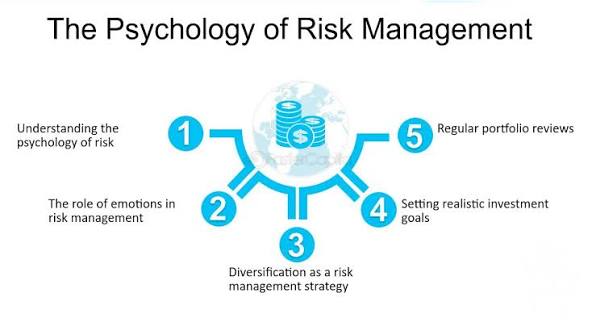
Good Trading Psychology supports effective risk management.
Risk management and trading psychology are inseparable. Even the strongest mindset can weaken without proper risk controls, and even the best risk rules fail if emotions constantly override them.
Professional traders create a system before the market opens. They know:
- Entry price
- Stop loss
- Take profit
- Position size
- Maximum daily loss
- Maximum weekly loss
Because every decision is planned in advance, there is very little room for emotional improvisation.
A beginner often asks:
“How much can I make today?”
A professional asks:
“How much am I willing to lose if I’m wrong?”
That single question changes everything.
Example of Healthy Risk Management
Account Size: ₹100,000
Risk per Trade: 1%
Maximum Loss: ₹1,000
If the trader loses three trades in one day, they stop trading and review their journal instead of trying to “win it back.” This approach protects both capital and emotional stability.
Understanding investor behavior can help traders avoid emotional mistakes. The CFA Institute regularly publishes research on behavioral finance and decision-making.
Good vs Bad Trading Psychology
Understanding the difference between disciplined and emotional behavior helps traders identify bad habits before they become expensive.
| Good Trading Psychology | Bad Trading Psychology |
|---|---|
| Follows trading rules | Trades on impulse |
| Accepts losses calmly | Becomes angry after losses |
| Waits for quality setups | Trades every small movement |
| Uses fixed risk | Changes risk randomly |
| Keeps a trading journal | Never reviews trades |
| Focuses on consistency | Focuses on quick profits |
| Thinks in probabilities | Expects every trade to win |
| Protects capital | Chases losses |
Successful trading is rarely exciting. It is repetitive, disciplined, and often boring. That “boring” consistency is exactly what keeps professionals profitable.
Real-World Trading Scenario
Imagine Sarah, a beginner forex trader.
She starts with a ₹50,000 trading account.
During her first week, she follows her trading plan perfectly.
- Risk per trade: 1%
- Uses stop loss.
- Waits patiently for setups.
- Records every trade.
She loses four trades in a row.
Instead of changing her strategy, she continues following her plan.
During the next three weeks, her winning trades begin to outweigh her losses.
At the end of the month:
- Total Trades: 40
- Winning Trades: 24
- Losing Trades: 16
- Overall Result: Positive
Now compare this with another trader who constantly changes strategies after every losing trade. Even with a potentially profitable system, inconsistent execution destroys their edge.
The lesson is clear:
Discipline creates consistency. Consistency creates profitability.
Risk Management Plan Checklist
Before entering every trade, ask yourself these questions:
Every trader should understand the risks involved in financial markets. The U.S. Securities and Exchange Commission (SEC) provides educational resources on investing and risk awareness.
✅ Trading Checklist
- Have I identified a valid setup?
- Does this trade match my trading plan?
- Is my stop loss already defined?
- Is my risk less than 2%?
- Is my risk-to-reward ratio at least 1:2?
- Am I trading because of emotion?
- Have I checked major economic news?
- Is my position size correct?
- Am I calm and focused?
- Would I still take this trade if nobody else knew about it?
If you answer “No” to any critical question, consider skipping the trade.
Frequently Asked Questions (FAQs)
1. What is trading psychology?
Trading psychology refers to the emotions, beliefs, and mental habits that influence how traders make decisions in the financial markets.
2. Why is trading psychology important?
Even the best trading strategy can fail if emotions cause traders to ignore their trading plan.
3. What are the biggest emotions in trading?
Fear, greed, hope, overconfidence, and frustration are the most common emotions affecting traders.
4. How can beginners improve trading psychology?
Create a trading plan, use a trading journal, follow risk management rules, and practice patience.
5. What is revenge trading?
Revenge trading is placing impulsive trades after a loss in an attempt to recover money quickly.
6. Why should every trade have a stop loss?
A stop loss limits losses, protects capital, and removes emotional decision-making during market volatility.
7. What is the ideal risk per trade?
Most professional traders recommend risking only 1–2% of total trading capital on any single trade.
8. Can trading psychology be improved?
Yes. Like any skill, emotional discipline improves through experience, self-review, journaling, and consistent practice.
9. Why do traders overtrade?
Overtrading often results from boredom, FOMO, greed, or the desire to recover previous losses.
10. Is psychology more important than strategy?
A profitable strategy is essential, but psychology determines whether you execute that strategy consistently over time.
Final Thoughts
Mastering Trading Psychology takes time, practice, and discipline.
Your success in trading depends on your Trading Psychology more than any indicator.
Make Trading Psychology a daily part of your trading routine.
Trading is one of the few professions where intelligence alone doesn’t guarantee success. The market doesn’t reward the smartest trader—it rewards the most disciplined one. Every chart pattern, indicator, or strategy is only as effective as the trader applying it.
If you can learn to accept losses without panic, follow your plan without hesitation, and remain patient while others chase every market move, you will develop an advantage that many traders never achieve.
Remember these four principles:
- Protect your capital.
- Control your emotions.
- Trust your trading plan.
- Think long term.
Master your mind, and you’ll be in a far better position to master the markets.
Call to Action
If you found this guide helpful, share it with fellow traders and bookmark it for future reference. Building strong trading psychology is an ongoing journey, and reviewing these principles regularly can help you stay disciplined through changing market conditions.
Explore our other trading guides on Risk Management, Risk-Reward Ratio, Candlestick Patterns, and Price Action Trading to strengthen your overall trading skills.