
Risk Management in Trading
Risk Management in Trading: The Complete Guide to Protecting Your Capital and Achieving Long-Term Success

Introduction
Most beginner traders spend countless hours searching for the perfect indicator, the most profitable strategy, or the next big market opportunity. They believe that success comes from finding a magical setup that wins every trade. The truth is far different. Professional traders know that long-term profitability is not built on winning every trade—it is built on managing risk effectively.
Risk management is the foundation of successful trading. Without it, even the best trading strategy can eventually fail. Markets are unpredictable, and losses are an unavoidable part of trading. The difference between traders who survive and traders who blow their accounts is how they manage those losses.
Whether you trade forex, stocks, crypto, commodities, or funded accounts, understanding risk management can dramatically improve your chances of success. This guide explains everything you need to know about protecting your capital, controlling emotions, and building a sustainable trading career.
What Is Risk Management in Trading?
Risk management is the process of identifying, analyzing, and controlling potential losses in trading. It involves setting rules that protect your account from significant drawdowns while allowing profitable trades to grow.
Think of trading like driving a car. A seatbelt does not prevent accidents, but it protects you when something goes wrong. Risk management works in the same way. It cannot eliminate losses, but it can prevent a single mistake from destroying your account.
Professional traders understand that preserving capital is their first priority. Once capital is protected, opportunities will always exist in the market. Without capital, even the best trading opportunities become meaningless.
Why Risk Management Is More Important Than Strategy

Many traders are surprised to learn that a profitable strategy alone does not guarantee success. A trader with an average strategy and excellent risk management can outperform someone with a great strategy and poor discipline.
Consider two traders:
| Trader | Win Rate | Risk Per Trade |
|---|---|---|
| Trader A | 70% | 10% |
| Trader B | 50% | 1% |
Trader A may experience a few losses and quickly destroy a large portion of their account. Trader B can survive losing streaks and continue trading long enough for their edge to play out.
Trading is a marathon, not a sprint. The goal is not to make money quickly. The goal is to stay in the game long enough for consistent profits to accumulate over time.
The Golden Rule: Never Risk More Than 1–2% Per Trade
One of the most widely accepted principles in professional trading is limiting risk to 1% or 2% of your account balance per trade.
For example:
Account Size: $10,000
Risk Per Trade: 1%
Maximum Loss: $100
Even after several losing trades, the account remains healthy and recoverable.
Example of Capital Protection
| Consecutive Losses | Risk 1% | Risk 10% |
|---|---|---|
| 5 Losses | -5% | -50% |
| 10 Losses | -10% | -100% |
This simple rule can dramatically increase account longevity and reduce emotional stress.
Understanding Position Sizing
Position sizing determines how much capital you allocate to a trade based on your stop-loss distance and risk percentage.
Many beginners enter trades with random lot sizes. Professional traders calculate position size before every trade.
Position Size Formula
Position Size = Account Risk ÷ Stop Loss Distance
For example:
Account: $5,000
Risk: 1% ($50)
Stop Loss: 50 Pips
Position size should be adjusted so the maximum loss remains $50.
Position sizing ensures consistency and prevents overexposure to market volatility.
The Importance of Stop Loss Orders
A stop-loss order automatically closes a trade when the market reaches a predetermined price level.
Without a stop loss, small losses can quickly become devastating losses.
Benefits of stop losses include:
Capital protection
Reduced emotional trading
Better risk control
Consistent execution
Successful traders never enter a trade without knowing where they will exit if the trade goes wrong.
Risk-to-Reward Ratio Explained
Risk-to-reward ratio measures the amount of potential profit compared to the amount being risked.
Example:
Risk: $100
Reward: $300
Risk-to-Reward Ratio = 1:3
This means one winning trade can cover multiple losing trades.
Comparison Table
| Risk | Reward | Ratio |
|---|---|---|
| $100 | $100 | 1:1 |
| $100 | $200 | 1:2 |
| $100 | $300 | 1:3 |
| $100 | $500 | 1:5 |
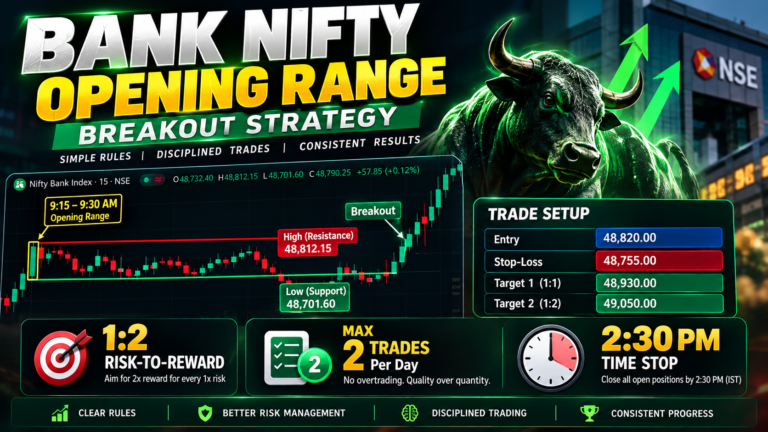
Many professional traders aim for a minimum 1:2 or 1:3 ratio whenever possible.

Managing Drawdowns
A drawdown is the decline in account value from its highest point.
Every trader experiences drawdowns. The goal is to keep them manageable.
Drawdown Recovery Challenge
| Drawdown | Required Recovery |
|---|---|
| 10% | 11.1% |
| 20% | 25% |
| 30% | 42.8% |
| 50% | 100% |
As drawdowns increase, recovery becomes significantly harder.
This is why preventing large losses is critical.
Emotional Risk Management
Trading psychology and risk management are closely connected.
Fear, greed, and revenge trading often lead to unnecessary losses.
Common emotional mistakes include:
Increasing position size after losses
Removing stop losses
Overtrading
Chasing the market
Professional traders follow predefined rules regardless of emotions.
A disciplined trader with a simple strategy often performs better than an emotional trader with a complex strategy.
Diversification in Trading
Diversification involves spreading risk across different assets instead of concentrating capital in one position.
Examples include:
Forex pairs
Stocks
Commodities
Indices
Cryptocurrencies
Diversification can reduce overall portfolio volatility and help protect capital during uncertain market conditions.
Risk Management for Funded Trading Accounts
For traders pursuing funded accounts through prop firms, risk management becomes even more important.
Most prop firms impose strict rules such as:
Daily drawdown limits
Maximum overall drawdown
Profit targets
Consistency requirements
Violating these rules can result in account termination.
Many funded traders risk only 0.5% to 1% per trade to maintain account stability and meet firm requirements.
Common Risk Management Mistakes
1. Trading Without a Stop Loss
This is one of the fastest ways to destroy an account.
2. Risking Too Much Per Trade
Large position sizes increase emotional pressure and account volatility.
3. Overtrading
More trades do not always mean more profits.
4. Ignoring Risk-to-Reward Ratios
Taking trades with poor reward potential reduces long-term profitability.
5. Revenge Trading
Trying to recover losses immediately often leads to even bigger losses.
Building a Personal Risk Management Plan
Every trader should create a written risk management plan.
Your plan should include:
Maximum risk per trade
Maximum daily loss
Weekly drawdown limit
Risk-to-reward requirements
Trading hours
Position sizing rules
A written plan removes emotional decision-making and promotes consistency.
The Professional Trader Mindset
Professional traders think differently than beginners.
Beginners focus on:
Winning trades
Fast profits
High leverage
Professionals focus on:
Capital preservation
Consistency
Long-term growth
This shift in mindset often determines who succeeds and who fails.

Conclusion
Risk management is not the most exciting part of trading, but it is undoubtedly the most important. Markets will always present opportunities, but only traders who protect their capital can take advantage of them consistently.
Successful trading is not about avoiding losses. It is about controlling losses while maximizing profitable opportunities. By following proper position sizing, using stop losses, maintaining favorable risk-to-reward ratios, and controlling emotions, traders can dramatically improve their long-term results.
The traders who survive for years are not necessarily the smartest or most talented. They are the ones who understand that protecting capital is the first step toward building lasting success in the financial markets.
Frequently Asked Questions
1. What is the safest risk percentage per trade?
Most professional traders risk between 1% and 2% of their account per trade.
2. Why is risk management important in trading?
Risk management protects trading capital and prevents large losses that are difficult to recover from.
3. What is a good risk-to-reward ratio?
Many traders aim for a minimum risk-to-reward ratio of 1:2 or 1:3.
4. Can I trade without a stop loss?
Trading without a stop loss significantly increases risk and is generally not recommended.
5. Does risk management guarantee profits?
No. Risk management does not guarantee profits, but it helps traders survive long enough for their strategies to generate consistent returns

One Comment