7 Ways to Control Emotions While Trading
How to Control Emotions While Trading
Trading looks simple from the outside.
You analyze a chart, find an entry, place a stop-loss, and wait for the market to move.
But once real money is involved, the situation changes.
A small loss can create fear. A winning trade can create overconfidence. A missed opportunity can trigger FOMO. After several losses, frustration may push you toward revenge trading.
This is why learning how to control emotions while trading is just as important as learning technical analysis.
The goal is not to become emotionless. That is unrealistic.
The real goal is to recognize your emotional reactions and prevent them from controlling your decisions.
A disciplined trader can feel fear and still follow the plan. They can experience a losing streak without increasing their position size. They can watch a trade move without chasing it.
In other words, emotional control in trading is the ability to follow your process when your emotions are telling you to do something else.
This guide explains practical ways to develop that control, avoid common psychological mistakes, and build a more consistent trading routine.
Learning how to control emotions while trading can help you make decisions based on your trading plan instead of fear, greed, or short-term market movements.
Table of Contents
- What Are Trading Emotions?
- Why Do Traders Lose Emotional Control?
- The 5 Most Dangerous Trading Emotions
- 7 Ways to Control Emotions While Trading
- How Risk Management Reduces Emotional Trading
- Trading Psychology: Strategy vs Emotional Control
- A Simple Pre-Trade Routine
- Common Emotional Trading Mistakes
- Pros and Cons of Emotional Discipline
- Expert Tips for Better Trading Psychology
- Frequently Asked Questions
- Conclusion
What Are Trading Emotions?
Trading emotions are psychological reactions that influence how you make decisions in the market.
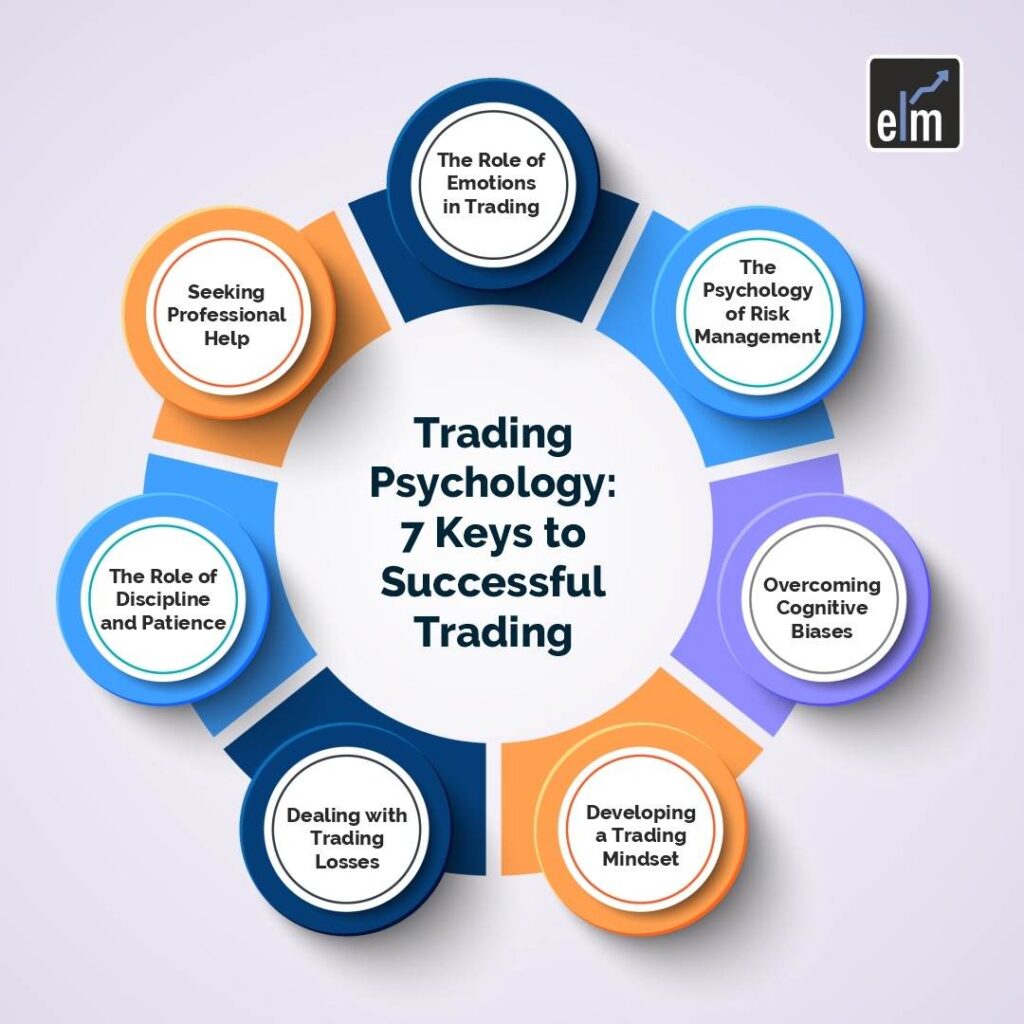
The most common ones are:
- Fear
- Greed
- Hope
- Frustration
- Anger
- Excitement
- Anxiety
- Overconfidence
- FOMO
These emotions are not automatically bad.
Fear can remind you that risk exists. Excitement can make trading engaging. Confidence can help you execute a well-tested strategy.
The problem starts when emotions override your trading rules.
For example:
Your original plan says to risk ₹500 on a trade. The trade starts moving against you, so you remove your stop-loss because you “know” the market will reverse.
That is not analysis anymore.
It is an emotional decision.
SEBI’s investor education material emphasizes that market investments carry risk and that investors should understand and manage those risks rather than assuming risk can be eliminated completely.
The same principle applies to trading psychology: you cannot remove uncertainty, but you can control how you respond to it.
Why Do Traders Lose Emotional Control?
One of the biggest lessons for beginners is understanding how to control emotions while trading before increasing position size or taking more frequent trades.
The market creates an unusual psychological environment.
You are making decisions under uncertainty while watching money move up and down in real time.
That combination can create powerful emotional reactions.
1. Real Money Creates Pressure
A strategy may look excellent on a demo account.
Once real money is involved, however, the same setup can suddenly feel uncomfortable.
A ₹1,000 loss may feel much larger emotionally than it looked on paper.
2. Traders Focus Too Much on Individual Trades
One trade does not determine whether a strategy works.
A strategy should be evaluated across a meaningful sample of trades.
If you treat every trade as extremely important, normal losses can feel like personal failures.
3. Lack of a Trading Plan
Without clear rules, traders have to make decisions emotionally.
They may ask:
- Should I enter now?
- Should I move my stop-loss?
- Should I take profit?
- Should I hold longer?
- Should I increase my position?
A written plan reduces this decision-making pressure.
4. Excessive Risk
Risking too much money is one of the fastest ways to create emotional stress.
When the potential loss is uncomfortable, following the strategy becomes much harder.
This is why risk management and trading psychology are closely connected.
5. Unrealistic Expectations
Expecting to make money every day creates unnecessary pressure.
Trading does not guarantee a profitable outcome on every trade or every session.
A professional mindset focuses on executing a repeatable process rather than forcing a particular daily result.
The 5 Most Dangerous Trading Emotions
Understanding the emotional cycle is the first step toward controlling it.
1. Fear
Fear usually appears when you are worried about losing money.
It can cause:
- Entering too late
- Closing profitable trades too early
- Avoiding valid setups
- Moving stop-losses
- Reducing confidence after losses
Example
Suppose your strategy gives a valid breakout setup.
You hesitate because your previous two trades lost money.
The setup works, but you never enter.
This is an example of fear affecting execution.
The problem was not the strategy.
The problem was allowing previous results to influence the current setup.
2. Greed
Greed often appears after winning trades.
You may think:

“This trade is already profitable, so why not increase my position?”
Or:
“I made ₹2,000 today. I can make another ₹2,000 quickly.”
This mindset can lead to overtrading and excessive risk.
A good trading day can actually become dangerous when confidence turns into overconfidence.
3. FOMO

FOMO means Fear of Missing Out.
It happens when traders see a market move without them.
The emotional reaction is:
“If I don’t enter now, I’ll miss the entire move.”
So they chase the price.
This is particularly dangerous after a strong breakout or rapid market movement.
A missed trade is not a loss.
Remember that.
There will always be another market opportunity.
4. Revenge Trading
Revenge trading occurs when a trader tries to recover a loss quickly because they are angry or frustrated.
For example:
- Trade 1: -₹500
- Trade 2: -₹700
- Trader becomes frustrated
- Position size increases
- Trade 3: -₹2,000
Now a manageable losing session has become a much larger problem.
The market does not know that you lost money earlier.
It does not owe you a recovery.
5. Overconfidence
Overconfidence often follows a winning streak.
Imagine winning five trades in a row.

You may start believing that your next trade is almost guaranteed to work.
That can lead to:
- Larger position sizes
- More frequent trades
- Ignoring confirmation
- Wider stop-losses
- Breaking trading rules
A winning streak does not remove risk.
7 Ways to Control Emotions While Trading
Now let’s look at how to control emotions while trading with practical habits that can be applied before, during, and after a trading session.
If you want to learn how to control emotions while trading, focus less on trying to “feel nothing” and more on creating systems that prevent emotional decisions.
1. Create a Written Trading Plan
Your trading plan should define what you will do before you enter the market.
At minimum, write down:
- Trading setup
- Entry conditions
- Stop-loss rules
- Take-profit rules
- Maximum risk per trade
- Maximum daily loss
- Trading sessions
- Conditions for staying out of the market
- Rules for stopping after consecutive losses
The more decisions you make before entering, the fewer decisions you have to make while emotional.
Simple Example
Before the trade:
Entry only after setup confirmation.
Stop-loss is fixed.
Risk is predetermined.
No revenge trade after a loss.
No increasing position size because of a winning trade.
Once the trade starts, your job is execution.
Not improvisation.
2. Reduce Your Risk
One of the most effective ways to improve emotional control is to make losses psychologically manageable.
If a normal losing trade feels devastating, your position size may be too large for your current comfort level.
Risk management does not guarantee profits.
Instead, it helps prevent one trade from causing disproportionate damage to your account or decision-making process.
SEBI advises investors to consider risk appetite and investment objectives when making investment decisions.
Ask Yourself Before Every Trade
“If this trade hits my stop-loss, will I still be able to follow my next setup objectively?”
If the answer is no, reconsider the risk.
3. Use a Stop-Loss and Respect It
A stop-loss is not an admission that your analysis was bad.
It is a predefined exit point that limits the damage if the market moves against your trade.
The emotional mistake happens when traders move the stop-loss because they do not want to accept the loss.
For example:
Original plan:
Entry → ₹100
Stop-loss → ₹98
Price falls to ₹98.
Instead of accepting the planned loss, the trader moves the stop to ₹96.
Then ₹94.
Eventually, a controlled loss becomes a much larger loss.
A stop-loss only helps when you respect the rule behind it.
4. Stop Checking Your Profit and Loss Every Few Seconds
Constantly watching your P&L can increase emotional pressure.
You may start reacting to money rather than price action.
Instead of thinking:
“My trade is down ₹800!”
Think:
“Has my trading thesis changed?”
That distinction is important.
Your decision should be based on the conditions defined in your strategy—not simply the amount of money displayed on the screen.
5. Keep a Trading Journal
A trading journal is one of the simplest ways to understand your emotional patterns.
After each trade, record:
| Journal Item | What to Record |
|---|---|
| Setup | What strategy did you use? |
| Entry | Why did you enter? |
| Exit | Why did you exit? |
| Risk | How much did you risk? |
| Result | Profit or loss |
| Emotion | Fear, greed, FOMO, calm, etc. |
| Mistake | Did you break a rule? |
| Lesson | What did you learn? |
After 20–30 trades, review your journal.
You may discover patterns such as:
- Most losses happen after overtrading.
- You exit winners too early.
- You increase risk after winning.
- You trade impulsively after a loss.
- You perform poorly during certain market conditions.
That information is more useful than simply looking at your total profit.
6. Use a Daily Loss Limit
A daily loss limit is a psychological safety mechanism.
For example, you might define:
“If I reach my maximum daily loss, I stop trading.”
This prevents a bad session from turning into an emotional trading marathon.
The exact limit should depend on your strategy, account size, risk tolerance, and trading plan.
The important principle is consistency.
When the limit is reached, stop.
Do not negotiate with yourself.
7. Take a Break After Emotional Trades
Not every trading problem needs another trade.
Sometimes the best decision is to step away.
Take a break when you notice:
- Anger
- Frustration
- Rapid clicking
- FOMO
- Desire to recover losses immediately
- Repeatedly changing your strategy
- Increasing position size without a plan
A short break can prevent one emotional decision from becoming a chain of emotional decisions.
How Risk Management Reduces Emotional Trading
Trading psychology and risk management should not be treated as two separate subjects.
They work together.
Consider two traders.
| Trader | Risk Per Trade | Emotional Pressure |
|---|---|---|
| Trader A | Manageable | Lower |
| Trader B | Excessive | Higher |
Trader A can accept a normal losing trade.
Trader B may panic because one loss has a significant impact on the account.
That emotional pressure can cause:
- Stop-loss manipulation
- Revenge trading
- Overtrading
- Early exits
- Excessive position sizing
This is why risk management in trading is also a psychological tool.
SEBI notes that investment risks cannot be completely eliminated, but they can be managed through research, diversification, suitable time horizons, and consideration of risk tolerance.
For traders, the equivalent mindset is simple:
Control the amount you can lose before worrying about how much you can make.
Understanding how to control emotions while trading becomes much easier when your potential loss is already defined before you enter a position.
Trading Psychology: Strategy vs Emotional Control
A profitable strategy alone does not automatically create a profitable trader.
Consider this comparison:
| Trading Strategy | Trading Psychology |
|---|---|
| Finds potential setups | Controls execution |
| Defines entries | Controls impulsive entries |
| Defines exits | Prevents emotional exits |
| Uses technical analysis | Manages fear and greed |
| Creates trading rules | Builds discipline |
| Measures performance | Reviews behavior |
You need both.
A trader with a strong strategy but poor discipline can still perform badly.
Likewise, excellent emotional control cannot make a completely ineffective strategy profitable.
The objective is to combine:
Strategy + Risk Management + Discipline + Emotional Control
A strong trading plan gives you a framework for how to control emotions while trading when the market behaves differently from what you expected.
A Simple Pre-Trade Routine
This simple routine gives you a repeatable answer to how to control emotions while trading instead of relying on willpower during stressful market conditions.
One of the best ways to control emotions is to create a repeatable routine.
Before entering a trade, ask these questions:
Step 1: Is there a valid setup?
If not, do nothing.
Step 2: Does the trade match my strategy?
Avoid trades that are outside your system.
Step 3: Where is my stop-loss?
Decide before entering.
Step 4: How much am I risking?
Know the maximum potential loss.
Step 5: Where is my planned exit?
Define your trade management rules.
Step 6: Am I entering because of analysis or emotion?
This is one of the most important questions.
Step 7: Can I accept the loss?
If you cannot emotionally accept the planned loss, reduce the risk or skip the trade.
The 60-Second Emotional Check
Before clicking Buy or Sell, pause for one minute.
Ask:
1. Am I calm?
2. Is this a valid setup?
3. Am I chasing the market?
4. Did I recently lose a trade?
5. Am I trying to recover money?
6. Is my position size within my rules?
7. Would I take this trade if there were no P&L displayed?
If the answer to several questions concerns you, do not rush.
Missing a trade is better than taking a low-quality trade because of FOMO.
Common Emotional Trading Mistakes
Even experienced traders can make psychological mistakes.
Here are some of the most common.
Moving the Stop-Loss
The trader does not want to accept the planned loss.
Better approach: Define your stop before entry and follow your strategy.
Chasing Price
The trader enters after a large move because they fear missing out.
Better approach: Wait for your setup.
Increasing Position Size After a Loss
The trader believes a larger trade will recover the previous loss.
Better approach: Keep risk consistent.
Trading Without a Break
After several losses, the trader continues trading emotionally.
Better approach: Use a predefined daily loss limit.
Taking Profit Too Quickly
Fear causes the trader to close a valid winner.
Better approach: Follow predefined exit rules rather than reacting to every candle.
Trading for Entertainment
The trader enters because the market feels boring.
Better approach: No setup, no trade.
Pros and Cons of Strong Emotional Discipline
| Pros | Cons |
|---|---|
| More consistent execution | Requires patience |
| Fewer impulsive trades | Can feel boring |
| Better risk control | Takes practice |
| Less revenge trading | Results may feel slower |
| Reduced FOMO | Requires strict rules |
| Better decision-making | You must accept missed trades |
Emotional discipline does not mean you will never lose.
It means your losses are less likely to trigger another poor decision.
Expert Tips for Better Trading Psychology
Tip 1: Think in Probabilities
No individual trade is guaranteed.
Your strategy may produce winning and losing trades.
Instead of asking:
“Will this trade win?”
Ask:
“Does this trade meet my rules?”
That small change can dramatically improve decision-making.
Tip 2: Separate Process From Outcome
A good trade can lose money.
A bad trade can make money.
For example, suppose you follow your strategy perfectly and the trade hits your stop-loss.
That can still be a good trade from a process perspective.
Conversely, if you break every rule and happen to make money, that does not make the decision good.
Judge yourself on execution—not luck.
Tip 3: Do Not Try to Recover Money Emotionally
The market does not know your previous results.
A ₹1,000 loss does not create an obligation for your next trade to make ₹1,000.
Every trade should be evaluated independently according to your system.
Tip 4: Protect Your Mental Capital
Your account balance is not your only form of capital.
Your attention, confidence, patience, and decision-making ability are also valuable.
If you are mentally exhausted, stepping away may be more productive than taking another trade.
Tip 5: Review Your Week, Not Just Your Day
Daily results can be misleading.
Instead, review your trading week.
Ask:
- How many trades followed my plan?
- How many were emotional?
- How often did I experience FOMO?
- Did I revenge trade?
- Did I respect my stop-loss?
- Did I overtrade?
- What mistake appeared repeatedly?
This turns trading psychology into something measurable.
If you’re serious about learning how to control emotions while trading, save this checklist and use it before every trading session.
A Practical Emotional Trading Checklist
Save this checklist near your trading screen.
Before Trading
- Am I calm?
- Do I have a clear trading plan?
- Is my risk predefined?
- Do I know my stop-loss?
- Do I know my exit conditions?
- Am I trading my setup?
During Trading
- Am I following my plan?
- Am I chasing price?
- Am I moving my stop-loss emotionally?
- Am I increasing risk?
- Am I reacting to P&L instead of market conditions?
After Trading
- Did I follow my rules?
- Did emotions influence my decisions?
- Did I make an avoidable mistake?
- What should I improve tomorrow?
Suggested placement: In the section discussing position size and emotional pressure.
Anchor text: risk management in trading
Suggested sentence:
Strong risk management in trading can reduce the emotional pressure that often causes traders to break their own rules.
3. Best Trading Indicators for Beginners
Suggested placement: In the section explaining that technical analysis and psychology work together.
Anchor text: best trading indicators for beginners
Suggested sentence:
Once your emotional discipline is under control, learning how indicators fit into a trading strategy can help you build a more structured decision-making process.
4. Beginner’s Guide to the Stock Market
Suggested placement: Near the introduction for readers who are completely new to markets.
Anchor text: beginner’s guide to the stock market
Suggested sentence:
If you are new to investing and trading, start with a beginner’s guide to the stock market before taking on more advanced strategies.
5 Authoritative External Resources
Use these as contextual, DoFollow where appropriate, authoritative references rather than placing all links in one paragraph.
- SEBI – How to Manage Investment Risks — useful in the risk-management section. SEBI: How to Manage Investment Risks
- SEBI Investor – Securities Trading — useful when explaining trading accounts, market basics, and investor education. SEBI Investor: Securities Trading
- SEBI Investor – Do’s and Don’ts — useful in the section on disciplined market participation. SEBI Investor: Do’s and Don’ts
- NSE Investor Awareness — useful for investor-awareness and warnings about unsolicited tips and social-media trading claims. NSE Investor Awareness
- AMFI Investor Knowledge Centre — useful when discussing investment risk, diversification, and investor education. AMFI Investor Knowledge Centre
NSE also currently warns investors about unsolicited stock tips and misleading social-media investment content, which reinforces the importance of independent research and disciplined decision-making.
Frequently Asked Questions
1. How to control emotions while trading?
The best way to control emotions while trading is to use a written trading plan, predefined risk, stop-loss rules, a trading journal, daily loss limits, and a consistent pre-trade routine. The objective is not to eliminate emotions but to prevent them from controlling decisions.
2. Why do I become emotional when trading?
Trading involves uncertainty and financial risk. Losses, rapid price movements, missed opportunities, and winning streaks can all trigger emotional reactions such as fear, greed, FOMO, frustration, and overconfidence.
3. How do I stop revenge trading?
Create a predefined rule that requires you to stop trading after reaching your daily loss limit or experiencing strong frustration. Take a break and review the trade before considering another position.
4. How do I control fear in trading?
Reduce excessive risk, use predefined stop-loss levels, and follow a written trading plan. Fear often becomes stronger when the potential loss is larger than you are psychologically comfortable accepting.
5. How do I stop FOMO trading?
Accept that missing a trade is normal. Do not chase a price movement simply because it has already moved significantly. Wait for your strategy to provide another valid setup.
6. How do I control greed in trading?
Use predefined position sizes and exit rules. Avoid increasing risk simply because you are currently profitable.
7. Does trading psychology really matter?
Yes. Trading decisions are ultimately made by people. A trader may have a sound strategy but still damage performance by overtrading, moving stop-losses, chasing price, or taking excessive risk.
8. Can a trading journal improve emotional control?
A trading journal can help you identify repeated behavioral patterns. Recording your emotions alongside entries and exits makes it easier to recognize problems such as FOMO, revenge trading, and premature exits.
9. Should I stop trading after a loss?
Not necessarily after every individual loss. A single loss can be a normal part of a trading strategy. However, if you reach your predefined daily loss limit or become emotionally unstable, stopping can help prevent impulsive decisions.
10. How can I become more disciplined in trading?
Create clear rules, reduce unnecessary decisions, use consistent risk, keep a journal, review your performance regularly, and follow the same process whether your previous trade won or lost.
11. How long does it take to control trading emotions?
There is no fixed timeline. Emotional discipline develops through repeated practice, structured routines, journaling, and reviewing mistakes. The goal is continuous improvement rather than becoming completely emotionless.
12. Is emotional trading always bad?
Having emotions is normal. The problem is allowing emotions to override your trading rules. Fear can signal caution, while confidence can support execution. The key is making decisions according to a tested process rather than temporary feelings.
Conclusion
Ultimately, how to control emotions while trading comes down to building a process that keeps your decisions consistent even when the market creates fear, excitement, or frustration.
Learning how to control emotions while trading is not about becoming a robot.
You will still experience fear after a loss.
You will still feel excitement after a winning streak.
You will occasionally see a trade move without you and feel the urge to chase it.
That is normal.
The difference between emotional and disciplined trading is what happens next.
A disciplined trader follows a process.
They know their entry.
They know their risk.
They know where the trade becomes invalid.
They accept that losses are part of trading.
Most importantly, they understand that one trade does not define their ability as a trader.
Start with seven simple habits:
- Create a written trading plan.
- Keep risk manageable.
- Respect your stop-loss.
- Stop watching P&L emotionally.
- Maintain a trading journal.
- Use a daily loss limit.
- Take breaks when emotions become intense.
The market will always provide uncertainty.
You cannot control the market.
But you can control your preparation, your risk, your decisions, and your response to the market.
That is where real trading discipline begins.
Ready to Improve Your Trading Psychology?
Before your next trade, don’t ask only:
“How much can I make?”
Ask:
“Can I follow my plan regardless of what happens?”
If the answer is yes, you are already moving toward a more disciplined trading mindset.
Schema Markup Recommendation
For this article, use:
- Article schema
- FAQPage schema for the FAQ section, provided the visible FAQ content remains on the page and complies with Google’s current structured-data requirements.
- BreadcrumbList schema
- Organization/Person schema for the website/author where appropriate.
Do not add schema markup for information that is not visibly present on the page.
Social Media SEO
Social Media Title:
7 Ways to Control Emotions While Trading
Social Media Description:
Learn practical ways to control fear, greed, FOMO and revenge trading while building stronger discipline, risk management and trading psychology.
Suggested Social Image:
Use the featured image at approximately 1200 × 630 px for social sharing.
Final WordPress SEO Checklist
Before publishing, check the following:
- ✅ Focus keyword in SEO title
- ✅ Focus keyword in URL
- ✅ Focus keyword in meta description
- ✅ Focus keyword in H1
- ✅ Focus keyword naturally used throughout the article
- ✅ Focus keyword appears in introduction
- ✅ Focus keyword appears in conclusion
- ✅ Short paragraphs
- ✅ H2/H3 hierarchy
- ✅ FAQ section
- ✅ Comparison table
- ✅ Pros & cons table
- ✅ Practical checklist
- ✅ Internal linking opportunities
- ✅ Authoritative external references
- ✅ Image alt-text recommendations
- ✅ Featured image recommendation
- ✅ Article + FAQ schema recommendation
- ✅ Social media title and description
- ✅ No guaranteed-profit claims
- ✅ No invented performance statistics
- ✅ Risk disclaimer through educational framing