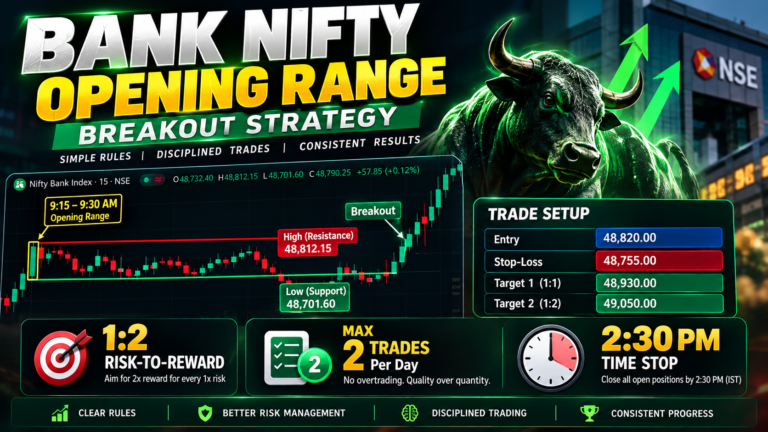
How to Avoid Overtrading: 12 Rules for Better Trading Discipline
Learning how to avoid overtrading starts with understanding why traders take unnecessary positions in the first place.
How to avoid overtrading is one of the most important skills a trader can develop because taking too many unnecessary trades can damage both trading performance and discipline.
Trading gives you an unusual problem: sometimes the hardest thing to do is nothing.
You can have a perfectly good trading strategy, understand technical analysis, identify support and resistance, manage your risk, and still lose money because you keep taking trades that were never part of your plan. That behavior is commonly called overtrading. It happens when trade frequency, position activity, or decision-making moves beyond what your strategy and risk plan can reasonably support. Current educational material from trading and investor-education sources also identifies frequent, emotionally driven trading as a serious risk.
The uncomfortable truth is that overtrading isn’t always caused by a lack of knowledge. Sometimes the trader knows exactly what they should do but does something different when money, fear, greed, boredom, or frustration enters the picture.
So, how do you avoid overtrading?
You don’t solve it simply by telling yourself to “have more discipline.” You build rules that reduce the number of decisions you have to make when emotions are running high.
This guide explains what overtrading looks like, why it happens, how it affects your performance, and how you can create a practical system to control it.
What Is Overtrading?
Overtrading is taking trades beyond what your strategy, risk plan, or mental state can reasonably support.
There isn’t one universal number that automatically makes a trader an overtrader. A scalper may legitimately execute several trades during a session, while a swing trader might hold a position for several days or weeks. Therefore, counting trades alone isn’t enough.
The better question is:
“Did I take this trade because my strategy gave me a valid reason, or because I felt the need to trade?”
That distinction matters.
Imagine your strategy produces three valid setups during a trading session. You take all three according to your rules. That doesn’t automatically mean you’re overtrading.
Now imagine you take those three setups, lose one, become frustrated, and then take four additional trades because you want to recover the loss. Your trade count has increased, but more importantly, your decision-making process has changed.
That is where overtrading becomes dangerous.
The SEC’s Investor.gov guidance similarly warns investors to pay attention to frequent in-and-out trading that doesn’t appear consistent with their objectives or risk tolerance.
Overtrading vs. Active Trading
Active trading and overtrading aren’t the same thing.
An active trader may execute many trades because the strategy genuinely requires frequent participation. A scalping strategy, for example, may generate multiple opportunities during a liquid market session.
Overtrading happens when the quantity of trades becomes disconnected from the quality of setups.
Consider this simple comparison:
| Active Trading | Overtrading |
|---|---|
| Trades follow a defined strategy | Trades are often impulsive |
| Entries have clear conditions | Entries are frequently unclear |
| Risk is predetermined | Risk changes emotionally |
| Trader can stop according to rules | Trader keeps searching for another trade |
| Losses are accepted | Losses trigger revenge trades |
| Trade frequency is strategy-dependent | Trade frequency is emotion-dependent |
The goal isn’t necessarily to trade less. The goal is to trade only when trading makes sense.
Why Traders Overtrade
Overtrading usually has more than one cause.
A trader may start the morning with a perfectly reasonable plan, but one losing trade can change the emotional environment. Suddenly the objective isn’t following the strategy anymore. The objective becomes getting the money back.
Other traders overtrade because they are bored. They sit in front of a chart for hours, watch every candle form, and eventually convince themselves that a random price movement is a trading opportunity.
Research also suggests that investor sentiment can influence intraday overtrading behavior, showing why emotional conditions can matter alongside technical analysis.
FINRA — Day Trading — useful for explaining day-trading risks and regulatory considerations.
Revenge Trading and Loss Recovery
One of the most effective ways to learn how to avoid overtrading after a loss is to create a mandatory cooldown period.
Revenge trading is one of the most common forms of overtrading.
You lose $20.
Instead of accepting the loss, your brain immediately starts calculating how to recover it.
“One good trade and I’m back to breakeven.”
Then another trade appears.
You lose again.
Now you want to recover $40.
The position size becomes slightly larger. The entry becomes less selective. The stop-loss gets moved. Eventually, a small planned loss can turn into a much larger problem.
This is why a trading plan should define your response to losses before the loss occurs.
A useful rule could be:
After a losing trade, I wait 10–15 minutes before considering another entry.
The exact period isn’t universal. What matters is creating enough separation between the emotional event and the next decision.
FOMO, Greed, and Boredom
Not every overtrade begins with a loss.
Sometimes it starts with a winning trade.
You make a good profit and suddenly feel extremely confident. The market continues moving, and you think, “I should have entered again.”
So you chase the next move.
That is FOMO — fear of missing out.
Boredom can be equally dangerous. When nothing is happening, traders sometimes feel that they need to create activity. The chart becomes entertainment rather than a decision-making environment.
Current trading-psychology material also identifies boredom, FOMO, emotional reactions, and the desire to remain constantly involved as common contributors to overtrading.
The market doesn’t pay you for being busy.
It pays you only when your decisions produce a favorable outcome relative to the risk you take.
How Overtrading Damages Your Results
The first obvious problem is financial.
Every additional trade creates another opportunity to lose. Depending on the market and instrument, trading can also involve spreads, commissions, financing costs, slippage, taxes, or other transaction-related expenses.
The SEC specifically warns investors to watch for excessive trading and unusually high fees associated with frequent activity.
But the bigger damage may be psychological.
Suppose your strategy is profitable when you take only your highest-quality setups. After three good trades, you become impatient and begin accepting mediocre setups.
Now your trading sample contains two different behaviors:
Your strategy + your emotions.
When you review your results, you may incorrectly conclude that the strategy doesn’t work.
The real problem might be execution.
Day trading itself carries substantial risk, and FINRA warns that it generally isn’t appropriate for people with limited resources, limited experience, or low risk tolerance.
Financial and Psychological Costs
Overtrading can create a cycle:
Loss → frustration → impulsive trade → larger loss → emotional pressure → more trades.
Breaking this cycle requires an interruption.
That interruption can be a maximum daily loss, a maximum number of trades, a mandatory cooldown, or simply closing the platform after your rules have been violated.
The important idea is simple:
Don’t rely on your emotional state to decide when you should stop.
Make that decision while you’re calm.
Signs You Are Overtrading
You may be overtrading if several of these behaviors sound familiar:
- You trade because the market feels boring.
- You enter without a complete setup.
- You increase position size after losing.
- You immediately enter after a stop-loss.
- You take trades simply because you missed the previous move.
- You move your stop-loss to avoid accepting a loss.
- You trade outside your normal session.
- You constantly switch strategies.
- You open charts repeatedly looking for something to trade.
- You feel uncomfortable when you’re not in a position.
- You don’t know how many trades you’ve taken until the session ends.
- You continue trading after reaching your daily loss limit.
- You focus more on recovering money than executing your strategy.
- You take a trade and struggle to explain exactly why it qualifies.
One sign by itself doesn’t prove that you’re overtrading. Look for a repeated pattern.
Your trading journal can make that pattern much easier to identify.
How to Avoid Overtrading
The best way to avoid overtrading is to turn vague intentions into measurable rules.
“Today I’ll be disciplined” is difficult to enforce.
“I will take no more than three trades and stop after losing 2R” is measurable.
Here are practical rules you can adapt to your own strategy.
FINRA Rule 2270 — Day-Trading Risk Disclosure Statement — useful for risk disclosures surrounding day trading
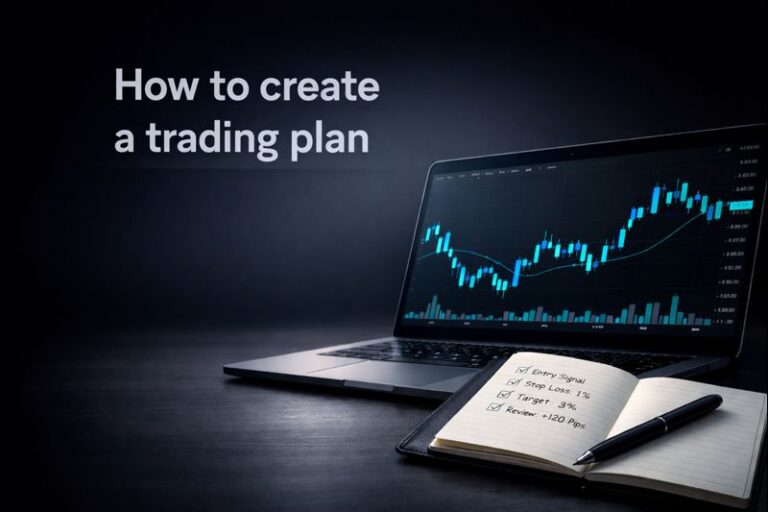
Create a Written Trading Plan
A trading plan should answer basic questions before the market opens.
What do I trade?
When do I trade?
What qualifies as a setup?
Where is my entry?
Where is my stop-loss?
Where is my target?
How much do I risk?
When do I stop trading?
Without these answers, every candle becomes an invitation to make a new decision.
A written plan turns trading from improvisation into execution.
You don’t need a 30-page document. One page can be enough if it clearly defines your rules.
Investor.gov — Excessive Trading at Investors’ Expense — useful for supporting discussion of excessive trading and transaction costs
For example:
| Rule | Example |
|---|---|
| Market | XAUUSD |
| Trading session | Defined session only |
| Setup | Only predefined setup |
| Risk | Fixed percentage per trade |
| Maximum trades | 3 per session |
| Maximum daily loss | 2R |
| Revenge trade | Not allowed |
| After 2 consecutive losses | Mandatory break |
| Rule violation | Trading ends |
The exact numbers should match your strategy and financial circumstances. They are examples, not universal recommendations.
Set a Maximum Number of Trades
A daily trade limit is one of the simplest ways to control overtrading.
Suppose your strategy historically performs best when you take one to four high-quality opportunities. You could establish a hard ceiling such as three trades per session.
Once you reach the limit, you’re finished.
The important word is hard.
If your limit is three but you tell yourself, “I’ll make an exception because this setup looks really good,” the limit isn’t really a limit.
It is a suggestion.
You can also create different limits for different trading styles. A scalper may naturally need more opportunities than a swing trader. The number should come from your strategy and trading data rather than someone else’s social-media rule.
Use a Daily Loss Limit
A daily loss limit protects you from emotional escalation.
For example, imagine a trader defines their maximum acceptable daily loss as 2R, where 1R represents their predefined risk on one trade.
If they reach -2R, trading ends.
This doesn’t mean the trader will never have a losing day. Losing days are part of trading.
The objective is to prevent one bad emotional session from becoming a major account drawdown.
FINRA’s day-trading risk disclosure emphasizes that day trading can be extremely risky and that traders should understand the financial risks involved before participating.
Trade Only Your Best Setups
This may be the most powerful rule of all.
Instead of asking:
“Can I make money from this trade?”
Ask:
“Does this trade meet every condition of my setup?”
Those questions sound similar, but they create completely different behavior.
Almost any market movement can potentially become profitable with enough imagination. That’s precisely the problem.
If you can explain every random movement as a possible opportunity, you’ll never run out of reasons to trade.
Your setup should do the opposite.
It should eliminate opportunities.
For example, your strategy might require:
- A specific market condition.
- A defined trend or structure.
- A particular confirmation.
- A predefined entry.
- A logical stop-loss.
- A favorable risk/reward profile.
If one critical condition is missing, there is no trade.
Build a Pre-Trade Checklist
A checklist can prevent emotional decisions from reaching your trading platform.
Before entering, ask:
1. Is this my setup?
If you can’t clearly identify the setup, don’t enter.
2. Is the market condition suitable?
A strategy that works during strong momentum may behave very differently in a sideways market.
3. Where is my invalidation point?
If you don’t know where the idea becomes wrong, you don’t have a complete trade plan.
4. What is my risk?
Determine the amount before clicking buy or sell.
5. Am I entering because of my rules or my emotions?
This question is extremely valuable.
If the honest answer is “I don’t want to miss the move,” you’re probably dealing with FOMO.
If the answer is “I need to recover my previous loss,” you’re probably dealing with revenge trading.
If the answer is “I’ve been watching the chart for two hours and need something to happen,” you’re probably dealing with boredom.
Sometimes the best trade is simply no trade.
Use a Cooldown After Losing Trades
A losing trade can change your mental state faster than you realize.
Even when you believe you’re calm, your next decision may be influenced by the desire to prove that the previous trade was wrong or recover the money you lost.
A cooldown creates distance.
You might use a simple rule such as:
After every losing trade, leave the chart for 10 minutes.
For two consecutive losses:
Take a longer break and reassess.
For a daily loss limit:
Close the platform.
Again, the exact timing isn’t universal. The purpose is behavioral control.
Think of a cooldown like a circuit breaker in an electrical system. The circuit breaker isn’t designed because electricity is bad. It’s there because too much current at once can damage the system.
Your trading account needs a similar protective mechanism.
Keep a Trading Journal
If you want to stop overtrading permanently, stop measuring only profits and losses.
Record why you entered.
Your journal can include:
| Field | What to Record |
|---|---|
| Date | Trading date |
| Instrument | Asset traded |
| Setup | Setup name |
| Entry | Entry price |
| Stop | Stop-loss |
| Target | Planned target |
| Risk | Amount or R |
| Result | Win/loss |
| Emotion | Calm, FOMO, frustration, etc. |
| Rule followed? | Yes/No |
| Mistake | What went wrong |
After 20–50 trades, patterns become easier to see.
Maybe your first two trades are consistently strong while trades four and five are poor.
Maybe most of your losses occur immediately after a previous loss.
Maybe you trade well during a specific session but perform badly when you continue into another session.
Those observations are much more valuable than simply saying, “I need more discipline.”
You now have evidence.
Learn to Accept No-Trade Days
One of the hardest lessons in trading is that being flat is a position.
You don’t need to trade every day.
You don’t need to recover yesterday’s loss today.
You don’t need to participate because other traders are posting screenshots of profits.
The market will continue tomorrow.
A no-trade day can actually be a successful day if your strategy produced no valid opportunities.
Think about a professional sniper. A sniper doesn’t fire at every movement in the distance. The job is to wait for a high-quality opportunity.
Trading requires a similar mindset.
Patience isn’t inactivity. Patience is selective action.
This is especially important for traders who spend long periods watching short timeframes. The faster the chart moves, the easier it becomes to confuse movement with opportunity.
How Long Should You Trade Each Day?
There is no universal number of hours that every trader should spend in the market.
Your trading schedule should depend on your strategy, market, liquidity, personal circumstances, and ability to maintain concentration.
More screen time does not automatically produce better trading.
In fact, staring at charts for hours can create more opportunities for boredom trades.
A trader who has completed their planned session and met their objectives may have a better decision to make: walk away.
Consider using a defined trading window.
For example:
Preparation → Trading Session → Review → Stop
Instead of:
Open chart → Trade → Watch → Trade → Watch → Trade → Get frustrated → Keep trading
Structure removes randomness.
A Simple Anti-Overtrading Routine
Here’s a practical routine you can adapt.
Before the Session
Write down:
- Markets you will trade
- Session you will trade
- Maximum number of trades
- Maximum daily loss
- Valid setups
- Risk per trade
- Conditions that will keep you out
Then ask yourself:
“What would make me stop trading today?”
Answer that before the first trade.
During the Session
Before every entry:
Setup?
Risk?
Invalidation?
Target?
Emotion?
If the trade doesn’t pass the checklist, don’t take it.
After a loss, step away briefly rather than immediately searching for another entry.
After the Session
Record:
- Number of trades
- Number of valid setups
- Number of trades outside the plan
- Profit/loss
- Emotional state
- Rule violations
The most important question isn’t:
“How much did I make?”
Ask:
“Did I execute my plan?”
A losing trade taken perfectly can be a good trading decision.
A winning trade taken impulsively can be a bad trading decision.
That distinction is fundamental.
Common Mistakes That Cause Overtrading
Mistake 1: Trying to Make Money Every Day
Trading isn’t a salary.
Some sessions simply won’t provide good opportunities.
Trying to force a daily profit target can turn the market into a personal ATM that you’re constantly demanding money from.
The market doesn’t owe you a setup.
Mistake 2: Increasing Size After Losses
Increasing position size to recover losses is dangerous because it changes the risk structure of your strategy.
If your original risk was calculated rationally, doubling it because you’re frustrated doesn’t improve the original trade.
It simply increases the consequences of the next mistake.
Mistake 3: Chasing Missed Trades
You see a perfect move after it already happened.
Your brain says:
“I missed it.”
Then you enter late.
This is classic FOMO behavior.
A missed trade is not a loss.
You didn’t lose money by failing to enter a trade you weren’t in.
Mistake 4: Changing Strategy Every Week
When traders overtrade, they sometimes blame the strategy.
They jump from indicators to price action, from scalping to swing trading, from one market to another.
The result is confusion.
Before replacing a strategy, collect enough data to determine whether the problem is genuinely the strategy or your execution.
Mistake 5: Confusing Activity With Productivity
Trading five hours isn’t automatically better than trading one hour.
Taking ten trades isn’t automatically better than taking two.
More activity only helps when that activity has a positive expected value after costs and risk.
Otherwise, you’re simply doing more of something that may be hurting your account.
Conclusion
Learning how to avoid overtrading isn’t about becoming afraid of taking trades. It’s about becoming selective.
You don’t need to predict every market movement. You don’t need to catch every opportunity. You don’t need to trade every hour or finish every session with a profit.
You need a process that protects you from your worst decisions.
Start with a written trading plan. Define your valid setups. Set a maximum number of trades. Establish a daily loss limit. Use cooldown periods after emotional trades. Keep a detailed journal and review your behavior instead of focusing exclusively on your account balance.
Most importantly, learn to accept that no trade is sometimes the correct trade.
Overtrading often begins with one small decision: “I’ll just take one more.”
Your job is to make sure that decision doesn’t control the rest of your session.
The strongest traders aren’t necessarily the people who find the most trades. They’re the people who can recognize when a trade isn’t worth taking—and have enough discipline to leave it alone.
“Want to practice reading these market concepts on live charts? TradingView offers free real-time charts, stock screeners, and paper trading.”
11. Featured Snippet Answer
How do you avoid overtrading?
To avoid overtrading, create a written trading plan, define your valid setups, set a maximum number of trades and daily loss limit, use a cooldown after losing trades, avoid FOMO and revenge trading, and maintain a trading journal. The goal isn’t simply to trade less; it’s to take only trades that meet your predefined strategy and risk-management rules.
12. FAQ Section
1. What is overtrading?
Overtrading is taking more trades than your strategy, risk plan, or mental state can reasonably support. It often involves impulsive entries caused by boredom, FOMO, revenge trading, greed, or frustration.
2. How can I stop overtrading after a loss?
Create a mandatory cooldown after losing trades. Avoid immediately entering another position to recover the loss, and use a predefined daily loss limit to prevent emotional escalation.
3. How many trades should I take per day?
There is no universal number. Your maximum should depend on your trading strategy, market, timeframe, risk tolerance, and historical results. A fixed trade limit can help prevent impulsive activity.
4. Is overtrading the same as day trading?
No. Day trading involves opening and closing positions within the same trading day, while overtrading refers to excessive or poorly justified trading activity. A day trader can follow a disciplined strategy without necessarily overtrading. FINRA defines day trading around intraday purchases and sales of securities.
5. Why do traders overtrade?
Common causes include revenge trading, FOMO, boredom, greed, frustration, overconfidence after winning, and the desire to recover losses quickly.
6. Can a trading journal help stop overtrading?
Yes. A journal can reveal patterns in your behavior, such as taking unnecessary trades after losses, trading outside your normal session, or repeatedly entering setups that don’t meet your rules.
7. Should I stop trading after two losses?
Not necessarily for every trader. However, a predefined rule requiring a break after consecutive losses can help prevent emotional decisions. The exact rule should be tested against your strategy and trading behavior.
8. Is taking fewer trades always better?
No. The objective isn’t the lowest possible trade count. The objective is to take trades that have a legitimate reason according to your strategy. A high-frequency strategy may legitimately produce more trades than a swing strategy.