How to Use ChatGPT for Stock Market Research
Introduction
Learning how to use ChatGPT for stock market research can help investors organize information, analyze financial statements, and evaluate potential investments more efficiently.
Investors today have access to more information than ever before. Annual reports, earnings calls, financial statements, analyst presentations, industry reports, economic data, and market commentary are available in enormous quantities. The challenge is no longer finding information—it is organizing, understanding, and evaluating it efficiently.
This is where ChatGPT can become a valuable research assistant.
When used correctly, ChatGPT can help investors summarize company reports, compare businesses, explain financial concepts, identify potential risks, build valuation frameworks, analyze supplied financial data, and generate more insightful research questions. It can dramatically reduce the time required to perform preliminary stock research.
However, there is an important limitation that every investor must understand.
⚠️ ChatGPT should be treated as a research assistant—not as an autonomous stock-picking machine or financial advisor.
The model can organize and interpret information, but it cannot replace human judgment, independent verification, or sound investment principles. It may misunderstand data, make calculation errors, or provide incomplete analysis if given poor inputs.
The most successful investors use AI to improve their thinking process, not replace it.
This guide explains exactly how to use ChatGPT for stock market research, what it can do well, where it struggles, and how investors can incorporate it into a professional research workflow.
What Is ChatGPT and How Can It Help With Stock Market Research?
ChatGPT is a large language model designed to understand and generate human-like text. In simple terms, it analyzes patterns in language and can help users process information, answer questions, summarize content, and organize research.
Understanding how to use ChatGPT for stock market research begins with understanding both its strengths and limitations.
For investors, this means ChatGPT can act as a powerful research companion.
It can:
- Summarize annual reports
- Explain financial metrics
- Compare companies
- Analyze user-provided financial data
- Identify strengths and weaknesses
- Generate research checklists
- Create investment frameworks
- Highlight potential risks
- Assist with valuation methodologies
What it cannot do reliably is replace critical thinking or guarantee investment outcomes.
ChatGPT’s Role in Investment Research
| Task | How ChatGPT Can Help | What You Should Verify |
|---|---|---|
| Financial Concepts | Explain metrics and terminology | Usually low verification needed |
| Company Research | Organize information and summarize reports | Verify facts and figures |
| Financial Analysis | Analyze supplied statements | Verify calculations |
| Valuation | Build valuation frameworks | Check assumptions |
| Industry Research | Provide research structure | Verify industry data |
| Risk Assessment | Identify possible risks | Validate relevance |
| Stock Recommendations | Generate perspectives | Never rely solely on AI |
| Future Predictions | Limited usefulness | Extremely high verification |
The key distinction is that ChatGPT excels at processing information but cannot exercise financial judgment like an experienced investor.
Can ChatGPT Analyze Stocks?
Short Answer
Yes, ChatGPT can analyze stocks when provided with relevant information, but it cannot independently determine whether a stock will outperform in the future.Many investors misunderstand what AI stock analysis actually means.
ChatGPT can evaluate:
- Revenue growth trends
- Profit margins
- Earnings performance
- Cash-flow quality
- Debt levels
- Competitive advantages
- Valuation metrics
- Risk factors
However, the quality of its analysis depends heavily on the quality of the information provided.
Example of a Poor Request
“Is Microsoft a good stock?”
This question is too broad.
A good investment depends on:
- Valuation
- Risk tolerance
- Investment horizon
- Growth expectations
- Market conditions
No serious investor can answer that question with a simple yes or no.
Example of a Better Request
“Analyze Microsoft’s revenue growth, operating margins, free cash flow, debt levels, ROIC, valuation multiples, and major business risks over the past five years. Present findings in a structured table and identify areas requiring further investigation.”
This prompt gives ChatGPT a clear framework.
The output will usually be significantly more useful because it narrows the task and encourages evidence-based analysis.
Garbage In, Garbage Out
A common mistake among investors is assuming AI automatically knows everything.
If you provide:
- Incomplete data
- Outdated information
- Incorrect financial figures
- Biased assumptions
The analysis will often be flawed.
Just as a spreadsheet cannot fix bad inputs, neither can ChatGPT.
What ChatGPT Cannot Reliably Do
❌ Predict next week’s stock price
❌ Guarantee future returns
❌ Replace due diligence
❌ Know undisclosed future events
❌ Eliminate investment risk
Investing always involves uncertainty. AI can reduce research effort, but it cannot remove uncertainty from markets.
How to Use ChatGPT for Stock Market Research
This is the most practical section of the guide.
Professional investors rarely start by asking, “Which stock should I buy?”
Instead, they follow a structured research process.
ChatGPT works best when integrated into that process.
Step 1: Define the Research Question
Most investors begin with questions that are too vague.
Bad Prompt
“Is Apple a good stock?”
Better Prompt
“Analyze Apple’s revenue growth, operating margin, free cash flow, debt levels, valuation multiples, competitive advantages, and major risks over the last five fiscal years. Present the findings in a table and identify areas requiring additional research.”
Why is the second prompt better?
Because it breaks investing into measurable components.
Instead of asking for an opinion, it asks for analysis.
Good investors seek evidence before conclusions.
Examples of Strong Research Questions
- Is revenue growth accelerating or slowing?
- Are profit margins improving?
- Is debt becoming a problem?
- Does valuation justify expected growth?
- What are the biggest risks?
- Does the company have a sustainable competitive advantage?
The more specific your question, the more useful the output becomes.
Step 2: Gather Reliable Information
Before asking ChatGPT to analyze a company, collect trustworthy information.

Useful sources include:
- Annual reports
- Quarterly reports
- Investor presentations
- Earnings call transcripts
- Balance sheets
- Income statements
- Cash-flow statements
- Regulatory filings
- Investor relations websites
- Reputable financial databases
📊 A surprising number of investment mistakes occur because investors analyze opinions rather than original company information.
Primary sources should always come first.
Step 3: Give ChatGPT Structured Data
Structured inputs produce structured outputs.
Instead of uploading random notes, organize information clearly.
Poor Input
Revenue: 100
Profit: 10
Debt: 20
Better Input
| Fiscal Year | Revenue | Net Income | Debt |
| 2022 | X | X | X |
| 2023 | X | X | X |
| 2024 | X | X | X |
Then ask:
“Identify trends, strengths, weaknesses, and potential risks based on this data.”
Structured information helps ChatGPT identify patterns more accurately.
Step 4: Ask Focused Questions
Many users try to solve everything with one massive prompt.
That approach often produces shallow analysis.
A better method is dividing research into smaller tasks.
Revenue Analysis Prompt
“Analyze revenue growth trends over five years and identify possible drivers behind the changes.”
Profitability Prompt
“Evaluate gross margin, operating margin, and net margin trends. What do they suggest about operational efficiency?”
Balance Sheet Prompt
“Assess debt levels, liquidity, and financial stability. Identify potential concerns.”
Breaking analysis into components often produces deeper insights.
Step 5: Challenge the Initial Analysis
One of the most powerful uses of ChatGPT is forcing yourself to consider opposing viewpoints.
Many investors unknowingly seek confirmation for existing beliefs.
This can lead to costly mistakes.
Ask ChatGPT:
- What is the bear case?
- What is the bull case?
- What assumptions am I making?
- What evidence contradicts my thesis?
- What risks am I overlooking?
- What information is missing?
Example Bear Case Prompt
“Assume I am bullish on this company. Build the strongest possible bear case using financial, competitive, regulatory, and valuation risks.”
This exercise often reveals blind spots that investors would otherwise ignore.
Step 6: Verify the Results
⚠️ Never assume AI-generated information is automatically correct.
Important items that should always be verified include:
- Revenue figures
- Earnings numbers
- Debt levels
- Cash-flow data
- Valuation ratios
- Regulatory information
- Industry statistics
- Market-share estimates
A useful rule:
Trust the framework. Verify the facts.
The framework is where ChatGPT often adds value.
The facts should come from reliable sources.
Step 7: Make the Investment Decision Yourself
This final step is where many investors fail.
ChatGPT can:
✅ Organize information
✅ Identify patterns
✅ Generate research ideas
✅ Highlight risks
✅ Compare companies
But only you can decide:
- Risk tolerance
- Position size
- Investment objectives
- Portfolio allocation
- Time horizon
Successful investing requires judgment, discipline, and accountability.
No AI tool can assume those responsibilities for you.
How to Use ChatGPT for Fundamental Stock Analysis
Fundamental analysis focuses on understanding the actual business behind a stock.
Instead of predicting short-term price movements, investors examine:
- Revenue growth
- Profitability
- Earnings quality
- Cash generation
- Balance-sheet strength
- Competitive advantages
- Management effectiveness
ChatGPT can significantly accelerate this process when supplied with accurate company data.
Many investors use ChatGPT for stock market research when evaluating revenue growth, profitability, free cash flow, and debt levels.
Revenue Growth
Revenue is often the starting point of business analysis.
Key areas to evaluate include:
- Year-over-year growth
- Five-year CAGR
- Segment performance
- Geographic expansion
- Customer growth
Revenue Analysis Prompt
“Analyze the company’s revenue growth over the last five years. Calculate trends, identify acceleration or deceleration, compare business segments, and highlight potential drivers behind the changes.”
Questions Investors Should Ask
- Is growth consistent?
- Is growth slowing?
- Which segments drive growth?
- Is growth organic or acquisition-driven?
- Is management meeting guidance?
Profitability Analysis
Growing revenue means little if profits are deteriorating.
Important profitability metrics include:
| Metric | Purpose |
| Gross Margin | Product economics |
| Operating Margin | Business efficiency |
| Net Margin | Overall profitability |
Profitability Prompt
“Analyze gross margin, operating margin, and net margin trends. Identify whether profitability is improving, deteriorating, or remaining stable and explain possible causes.”
Strong companies typically demonstrate consistent profitability over long periods.
Earnings Analysis
Earnings remain one of the most closely followed metrics in stock investing.
Key areas include:
- EPS growth
- Diluted EPS
- Earnings consistency
- Earnings quality
- Earnings surprises
Earnings Prompt
“Evaluate EPS growth over the last five years. Determine whether earnings growth is supported by operational improvement, margin expansion, share repurchases, or one-time events.”
Understanding the source of earnings growth is often more important than the growth rate itself.
How to Use ChatGPT for Fundamental Stock Analysis
Cash Flow Analysis
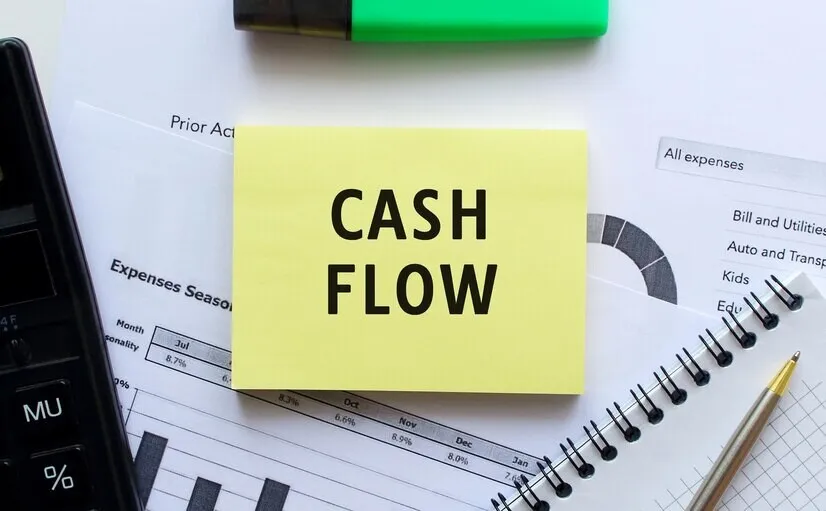
Many inexperienced investors focus only on revenue and earnings. Professional investors spend significant time examining cash flow because cash is far more difficult to manipulate than accounting profits.
A company can report strong earnings while generating weak cash flow.
Key metrics include:
- Operating Cash Flow (OCF)
- Free Cash Flow (FCF)
- Capital Expenditure (CapEx)
- Free Cash Flow Margin
- Cash Conversion
Why Cash Flow Matters
Consider two companies with identical net profits.
- Company A converts most profits into cash.
- Company B reports profits but struggles to generate cash.
Over time, Company A usually has greater flexibility to:
- Invest in growth
- Repurchase shares
- Pay dividends
- Reduce debt
- Survive economic downturns
Cash Flow Analysis Prompt
Analyze the company’s operating cash flow, free cash flow, and capital expenditure trends over the last five years. Identify whether cash generation supports reported earnings and highlight any warning signs.
Questions to Ask
- Is free cash flow growing?
- Does cash flow track earnings?
- Is CapEx increasing?
- Are acquisitions consuming cash?
- Is the business self-funding growth?
💡 A company with modest earnings but strong cash flow may be healthier than a company with impressive earnings and weak cash generation.
Balance Sheet Analysis
The balance sheet reveals a company’s financial strength.
Many businesses fail not because they lack profits, but because they run out of cash.
Important balance-sheet metrics include:
- Cash and equivalents
- Total debt
- Net debt
- Debt-to-equity ratio
- Current ratio
- Working capital
- Liquidity position
Balance Sheet Prompt
Review the company’s balance sheet and assess liquidity, debt levels, working capital, and overall financial strength. Identify potential financial risks and compare the company’s leverage with industry standards.
Key Questions
- Is debt increasing rapidly?
- Can the company comfortably service debt?
- Is liquidity improving?
- Does management rely heavily on borrowing?
- Could economic weakness create financial stress?
Common Red Flags
⚠️ Declining cash reserves
⚠️ Rising debt faster than revenue
⚠️ Negative working capital trends
⚠️ Frequent equity dilution
⚠️ Weak liquidity ratios
Returns on Capital
Great businesses generate high returns on invested capital for long periods.
This is often one of the clearest indicators of competitive strength.
Important metrics include:
- ROE (Return on Equity)
- ROCE (Return on Capital Employed)
- ROIC (Return on Invested Capital)
Returns on Capital Prompt
Analyze the company’s ROE, ROCE, and ROIC trends over the last five years. Determine whether returns are improving and assess what they reveal about management effectiveness and competitive advantages.
What These Metrics Tell Investors
| Metric | What It Measures |
|---|---|
| ROE | Profitability relative to shareholder equity |
| ROCE | Efficiency of total capital employed |
| ROIC | Ability to generate returns from invested capital |
High returns sustained over many years often indicate:
- Strong brand power
- Network effects
- Cost advantages
- Pricing power
- Efficient management
However, no metric should be analyzed in isolation.
How to Use ChatGPT for Technical Stock Analysis
Can ChatGPT Help With Technical Analysis?
Yes, but only when provided with chart data, indicator values, or price information. It should not be treated as a reliable predictor of future price movements.
Technical analysis focuses on price action rather than business fundamentals.
ChatGPT can help explain patterns, evaluate supplied data, and identify possible interpretations.
It cannot see future market behavior.
When exploring how to use ChatGPT for stock market research, traders often use it to interpret technical indicators and market structure.
Trend Analysis
Trend identification is one of the most common uses of technical analysis.
Trend Analysis Prompt
Based on the provided price data, determine whether the stock is in an uptrend, downtrend, or consolidation phase. Explain the evidence supporting your conclusion.
Key observations include:
- Higher highs
- Higher lows
- Lower highs
- Lower lows
- Trend strength
Support and Resistance
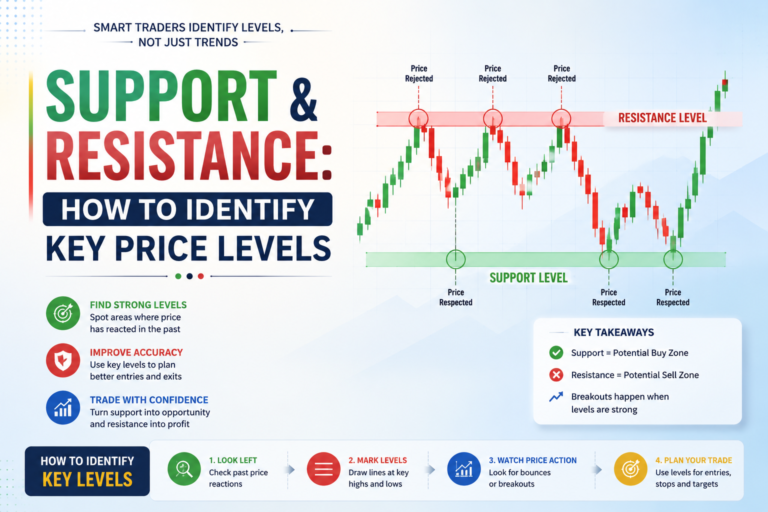
Support and resistance levels often influence trader behavior.
Prompt
Analyze the provided price data and identify major support and resistance zones. Explain why these levels may be important.
Useful questions:
- Has price repeatedly reacted here?
- Is volume increasing near the level?
- Does the level align with previous highs or lows?
Moving Averages
Moving averages help smooth price fluctuations.
Popular choices include:
- 20-day MA
- 50-day MA
- 100-day MA
- 200-day MA
Prompt
Evaluate the relationship between price and key moving averages. Identify potential bullish or bearish signals and explain their significance.
RSI and MACD
Two widely used momentum indicators are:
RSI (Relative Strength Index)
Used to identify:
- Overbought conditions
- Oversold conditions
- Momentum shifts
MACD
Used to identify:
- Trend direction
- Momentum changes
- Potential reversals
Prompt
Analyze the supplied RSI and MACD readings. Explain what they suggest about momentum, trend strength, and potential risks.
Candlestick Patterns
ChatGPT can explain candlestick formations such as:
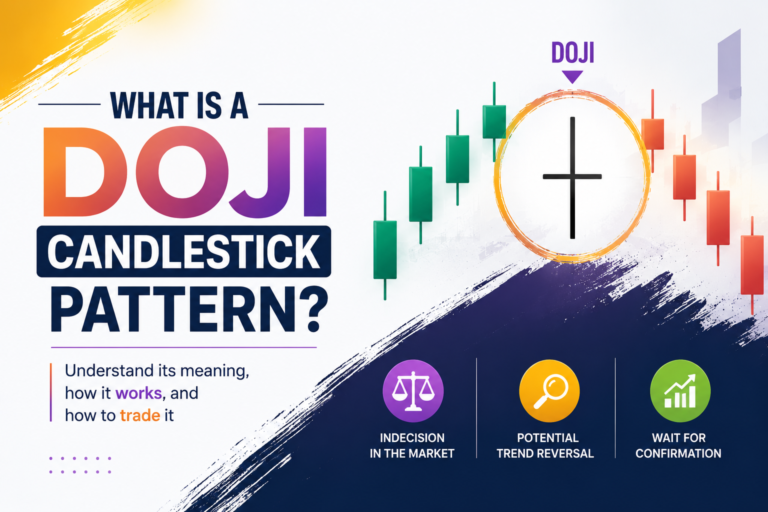
- Doji
- Hammer
- Shooting Star
- Engulfing Pattern
- Morning Star
- Evening Star
Prompt
Explain the significance of the supplied candlestick pattern and discuss possible bullish and bearish interpretations.
Technical Analysis Limitations
Investors should remember:
⚠️ Technical indicators are not guarantees.
⚠️ Markets can remain irrational longer than expected.
⚠️ Indicators frequently generate false signals.
⚠️ Context matters more than individual indicators.
ChatGPT can explain signals, but investors must evaluate them within broader market conditions.
Using ChatGPT for Financial Statement Analysis
Financial statements are often intimidating for new investors.
ChatGPT can make them far easier to understand.
The three primary financial statements are:
- Income Statement
- Balance Sheet
- Cash Flow Statement
Income Statement Analysis
Ask ChatGPT to identify:
- Revenue trends
- Gross margin changes
- Operating margin trends
- Earnings growth
- Expense trends
Prompt
Analyze this income statement and identify the most important revenue, profitability, and expense trends over the last five years.
Balance Sheet Analysis
Useful for identifying:
- Debt growth
- Liquidity concerns
- Cash reserves
- Working capital issues
Prompt
Review this balance sheet and identify strengths, weaknesses, unusual trends, and potential financial risks.
Cash Flow Statement Analysis
Often overlooked by retail investors.
Prompt
Analyze the cash flow statement and identify whether cash generation supports reported earnings. Highlight any concerning trends.
Financial Statement Red Flags
ChatGPT can help identify:
🚩 Revenue slowing sharply
🚩 Margin deterioration
🚩 Increasing debt
🚩 Falling cash flow
🚩 Aggressive accounting
🚩 Working capital problems
🚩 Excessive share dilution
Always verify findings using original company reports.
Using ChatGPT to Compare Two Stocks
Stock selection often comes down to comparing alternatives.
ChatGPT can structure these comparisons efficiently.
Example Comparison Framework
| Factor | Company A | Company B |
| Revenue Growth | Compare | Compare |
| Profit Margins | Compare | Compare |
| EPS Growth | Compare | Compare |
| Free Cash Flow | Compare | Compare |
| Debt Levels | Compare | Compare |
| ROE | Compare | Compare |
| Valuation | Compare | Compare |
| Dividend Yield | Compare | Compare |
| Competitive Advantage | Compare | Compare |
| Key Risks | Compare | Compare |
Reusable Comparison Prompt
Compare Company A and Company B using revenue growth, profitability, free cash flow, debt levels, returns on capital, valuation metrics, dividend policy, competitive advantages, growth opportunities, and major risks. Present the analysis in a structured table and identify areas requiring further investigation.
Using ChatGPT for Stock Valuation
Valuation helps investors determine whether a stock appears expensive, fairly valued, or potentially undervalued.
A good company is not always a good investment if purchased at an excessive price.
Understanding Valuation
Market Price
The current trading price.
Fair Value
An estimate based on reasonable assumptions.
Intrinsic Value
The estimated economic worth of a business.
Important Valuation Metrics
P/E Ratio
Measures:
Price relative to earnings.
P/B Ratio
Measures:
Price relative to book value.
EV/EBITDA
Useful for comparing operating performance across businesses.
Price-to-Sales Ratio
Helpful for businesses with low or inconsistent profits.
Dividend Yield
Useful for income-focused investors.
DCF Analysis
Discounted Cash Flow (DCF) analysis estimates value based on future cash generation.
DCF Framework Prompt
Create a discounted cash flow valuation framework using projected revenue growth, operating margins, free cash flow assumptions, discount rates, and terminal growth assumptions. Clearly explain the sensitivity of the valuation to changes in assumptions.
Important Reminder
⚠️ Small changes in assumptions can dramatically change valuation outcomes.
Never treat an AI-generated valuation as a guaranteed fair value estimate.
Using ChatGPT for Industry and Competitor Analysis
Even great companies operate within industries.
Understanding the industry often explains future opportunities and risks.
Industry Research Areas
ChatGPT can help analyze:
- Industry growth
- Market size
- Market share
- Competitive intensity
- Regulatory environment
- Technology disruption
- Customer behavior
- Pricing power
Competitor Analysis Prompt
Analyze the competitive landscape of this industry. Identify major competitors, barriers to entry, pricing power, market-share dynamics, and long-term growth opportunities.
Industry Research Framework
- Industry Size
- Growth Rate
- Market Leaders
- Competitive Advantages
- Regulatory Risks
- Technological Changes
- Economic Sensitivity
- Future Opportunities
Investors frequently overanalyze companies while underanalyzing industries.
Strong industries can support average businesses, while weak industries can hurt excellent businesses.
Using ChatGPT to Identify Investment Risks
Many investors spend most of their time looking for reasons to buy a stock.
Professional investors spend just as much time looking for reasons not to buy it.
This is where ChatGPT can be extremely valuable.
Instead of reinforcing your existing opinion, use it to challenge your investment thesis.
Types of Risks Investors Should Investigate
Debt Risk
Ask:
Evaluate the company’s debt profile, maturity schedule, interest coverage ratio, and refinancing risks. Identify scenarios that could create financial stress.
Liquidity Risk
Ask:
Analyze the company’s liquidity position and ability to meet short-term obligations during adverse economic conditions.
Earnings Risk
Ask:
Identify factors that could negatively affect future earnings growth, margins, or profitability.
Competitive Risk
Ask:
Evaluate threats from existing competitors, new entrants, substitutes, and changing customer preferences.
Regulatory Risk
Ask:
Identify regulatory, legal, or compliance risks that could materially affect the business.
Management Risk
Ask:
Analyze management execution risks, capital allocation decisions, governance concerns, and succession planning issues.
Valuation Risk
Ask:
Identify scenarios where current valuation assumptions may prove overly optimistic.
Macroeconomic Risk
Ask:
Assess how inflation, interest rates, economic slowdowns, currency fluctuations, or geopolitical events could impact the business.
Powerful Bear Case Prompt
📌 One of the best prompts investors can use:
Assume I am highly bullish on this company. Build the strongest possible bear case. Challenge all key assumptions, identify overlooked risks, examine valuation concerns, assess competitive threats, and explain what could cause the investment thesis to fail over the next five years.
This single exercise can prevent costly mistakes caused by confirmation bias.
20 High-Value ChatGPT Prompts for Stock Market Research
Investors can compare valuation metrics across industries using reliable market data providers.
1. Company Overview
Provide a comprehensive overview of the company’s business model, revenue sources, competitive advantages, customer segments, and growth drivers.
2. Fundamental Analysis
Conduct a complete fundamental analysis using revenue growth, profitability, cash flow, balance-sheet strength, returns on capital, valuation, and risks.
3. Financial Statement Analysis
Review the income statement, balance sheet, and cash-flow statement and identify important trends and red flags.
4. Revenue Analysis
Analyze revenue growth trends, segment performance, geographic growth, and potential drivers.
5. Profitability Analysis
Evaluate gross margin, operating margin, and net margin trends over five years.
6. Cash Flow Analysis
Analyze operating cash flow, free cash flow, capital expenditures, and cash conversion quality.
7. Balance Sheet Analysis
Assess liquidity, leverage, debt obligations, and financial flexibility.
8. Valuation Analysis
Evaluate valuation using P/E, P/B, EV/EBITDA, Price-to-Sales, and Dividend Yield.
9. DCF Framework
Create a DCF valuation framework and explain how different assumptions affect estimated intrinsic value.
10. Competitor Comparison
Compare Company A and Company B across growth, profitability, valuation, competitive position, and risk.
11. Industry Analysis
Analyze industry growth, market share trends, barriers to entry, pricing power, and competitive intensity.
12. Risk Analysis
Identify financial, operational, regulatory, competitive, and valuation risks.
Regulatory disclosures often reveal important risks that may not appear in earnings presentations.
13. Bull Case Analysis
Build the strongest possible bull case and identify factors that could drive long-term outperformance.
14. Bear Case Analysis
Build the strongest possible bear case and identify factors that could permanently impair shareholder value.
15. Earnings Analysis
Evaluate earnings quality, earnings growth, earnings sustainability, and earnings-related risks.
16. Dividend Analysis
Analyze dividend growth, payout ratios, coverage, sustainability, and risks.
17. Management Analysis
Assess management quality, capital allocation history, insider ownership, and governance practices.
18. Investment Thesis
Create a complete investment thesis including growth drivers, risks, valuation considerations, and key assumptions.
19. Portfolio Comparison
Compare this stock against the existing portfolio and identify diversification benefits and concentration risks.
20. Research Checklist
Generate a professional stock research checklist and identify unanswered questions requiring further investigation.
Example: Complete ChatGPT Stock Research Workflow
Imagine an investor researching a fictional company called Alpha Tech Ltd.
Step 1: Company Overview
The investor asks ChatGPT to summarize:
- Business model
- Revenue sources
- Key products
- Growth opportunities
Step 2: Financial Analysis
The investor uploads:
- Five years of revenue
- Earnings data
- Cash-flow statements
- Balance-sheet data
ChatGPT identifies trends and potential concerns.
One of the most practical ways to use ChatGPT for stock market research is analyzing financial statements and identifying important trends.
Step 3: Industry Analysis
The investor asks:
- How fast is the industry growing?
- Who are the main competitors?
- What are the barriers to entry?
Step 4: Valuation
The investor evaluates:
- P/E ratio
- EV/EBITDA
- DCF assumptions
- Historical valuation ranges
Investors interested in how to use ChatGPT for stock market research frequently use valuation frameworks such as P/E ratios and DCF analysis.
Step 5: Risk Assessment
ChatGPT identifies:
- Debt risk
- Competitive threats
- Regulatory concerns
- Valuation risk
Risk assessment is another important reason investors use ChatGPT for stock market research before making investment decisions.
Step 6: Bull Case
Potential upside scenarios are explored.
Step 7: Bear Case
Potential downside scenarios are investigated.
Step 8: Final Research Checklist
Remaining questions are identified before any capital is invested.
This process is significantly more robust than simply asking:
“Should I buy this stock?”
Common Mistakes When Using ChatGPT for Stock Research
1. Trusting AI Without Verification
Fix: Always verify financial figures from original sources.
2. Asking Vague Questions
Fix: Use structured prompts and clear objectives.
3. Using Outdated Information
Fix: Confirm all current financial data independently.
4. Assuming ChatGPT Has Live Market Data
Fix: Provide current information yourself or verify externally.
5. Treating Predictions as Facts
Fix: Focus on scenarios rather than predictions.
6. Ignoring Financial Statements
Fix: Base analysis on actual company reports.
7. Asking for Buy or Sell Answers
Fix: Request analysis instead of recommendations.
8. Confirmation Bias
Fix: Regularly request bear-case analysis.
9. Over-Relying on Technical Signals
Fix: Combine technical and fundamental analysis.
10. Ignoring Valuation
Fix: Analyze price relative to business value.
11. Ignoring Risks
Fix: Research downside scenarios thoroughly.
12. Using Poor Source Data
Fix: Prioritize company filings and reputable databases.
Is ChatGPT Reliable for Stock Market Research?
Short Answer
ChatGPT can be highly useful for organizing information, explaining concepts, and analyzing supplied data, but it should not be treated as a fully reliable source of investment decisions.
Reliability Table
| Use Case | Reliability | Human Verification Needed |
|---|---|---|
| Explaining Financial Concepts | High | Low |
| Organizing Financial Data | High | Medium |
| Summarizing Documents | Medium-High | Medium |
| Company Research Frameworks | High | Medium |
| Current Market Information | Depends on Data | High |
| Future Price Predictions | Low | Very High |
| Investment Decisions | Not a Substitute for Judgment | Very High |
Main Limitations
Hallucinations
AI can occasionally generate inaccurate information.
Outdated Information
Models may not contain the latest market developments.
Calculation Errors
Important calculations should always be checked.
Missing Context
Investment decisions often require context beyond available information.
Misinterpretation
Poor inputs can produce poor outputs.
The safest approach is to treat ChatGPT as an assistant rather than an authority.
ChatGPT vs Traditional Stock Research
| Factor | ChatGPT | Traditional Research |
| Speed | Very Fast | Slower |
| Data Organization | Excellent | Manual |
| Idea Generation | Strong | Depends on Analyst |
| Current Data | Limited | Better |
| Human Judgment | Limited | Essential |
| Context Awareness | Moderate | Strong |
| Verification | Required | Required |
| Investment Decisions | Support Tool | Primary Process |
The most effective investors combine both approaches.
AI enhances research efficiency while human judgment remains responsible for decision-making.
How Investors Can Build an AI-Assisted Stock Research System
A repeatable workflow often produces better results than random analysis.
Suggested Process
1. Screen Stocks
Identify potential candidates.
2. Collect Data
Gather:
- Annual reports
- Financial statements
- Earnings transcripts
- Industry data
3. Analyze Fundamentals
Use ChatGPT to evaluate:
- Revenue growth
- Margins
- Cash flow
- Debt
4. Analyze Valuation
Review:
- P/E
- P/B
- EV/EBITDA
- DCF assumptions
5. Analyze Industry
Study:
- Competition
- Growth potential
- Market structure
6. Identify Risks
Build bull and bear cases.
7. Verify Everything
Check all important figures.
8. Make the Decision
Use personal judgment and risk management.
Should You Use ChatGPT to Pick Stocks?
There is an important difference between these two questions:
Question 1
Can ChatGPT help me research a stock?
The answer is generally yes.
Question 2
Can ChatGPT tell me which stock to buy?
The answer is much less convincing.
Investment success depends on:
- Valuation
- Risk tolerance
- Market conditions
- Portfolio construction
- Time horizon
- Personal objectives
These factors require human judgment.
The strongest use of ChatGPT is improving research quality, not replacing investor responsibility.
Final Checklist Before Investing
Before purchasing any stock, ask yourself:
- Do I understand the business model?
- Have I reviewed financial statements?
- Have I analyzed revenue growth?
- Have I evaluated profitability?
- Have I examined cash flow?
- Have I reviewed debt levels?
- Have I assessed valuation?
- Have I researched the industry?
- Have I studied competitors?
- Have I identified major risks?
- Have I developed a bear case?
- Have I verified important facts?
- Have I written an investment thesis?
- Have I considered position sizing?
- Does this investment fit my risk tolerance?
Financial Disclaimer
This article is for educational and informational purposes only and should not be considered financial, investment, legal, or tax advice. Investors should conduct independent research, verify information using primary sources, and consult qualified professionals when appropriate. All investments involve risk, including potential loss of capital.
Conclusion
Understanding how to use ChatGPT for stock market research can significantly improve the efficiency of your investment process. The technology excels at organizing information, summarizing documents, explaining financial concepts, comparing businesses, identifying risks, and generating structured research frameworks.
Its greatest value is not providing a one-word “buy” or “sell” answer.
Instead, ChatGPT helps investors process information more effectively, challenge assumptions, expose blind spots, and ask better questions. Investors who combine AI-assisted research with independent verification, sound valuation practices, and disciplined decision-making are likely to gain far more value than those who rely on AI for predictions alone.
In investing, better questions often lead to better decisions—and that is where ChatGPT can be most useful.
Understanding how to use ChatGPT for stock market research can improve research efficiency, but every investment decision should still be supported by independent verification and sound judgment.
“Want to practice reading these market concepts on live charts? TradingView offers free real-time charts, stock screeners, and paper trading.”
Suggested FAQ Schema Questions
Can ChatGPT analyze stocks?
Yes. ChatGPT can analyze supplied financial data, explain metrics, compare companies, and identify risks, but investors should verify all important information.
Is ChatGPT reliable for stock market research?
It is useful for research assistance and information organization, but it should not replace independent verification or investment judgment.
Can ChatGPT predict stock prices?
No. ChatGPT cannot reliably predict future stock prices or market movements.
How can I use ChatGPT for fundamental analysis?
You can use it to analyze revenue growth, profitability, cash flow, debt levels, valuation metrics, and business risks.
What are the best ChatGPT prompts for stock analysis?
Prompts that focus on specific tasks such as financial statement analysis, valuation, competitor comparison, and risk assessment usually provide the best results.
Can ChatGPT compare two stocks?
Yes. It can organize comparisons across growth, profitability, valuation, risks, and competitive advantages.
Can ChatGPT help with stock valuation?
Yes. It can help build valuation frameworks using metrics like P/E, P/B, EV/EBITDA, and DCF models.
Should I use ChatGPT to pick stocks?
It is better used to support research rather than directly selecting investments.